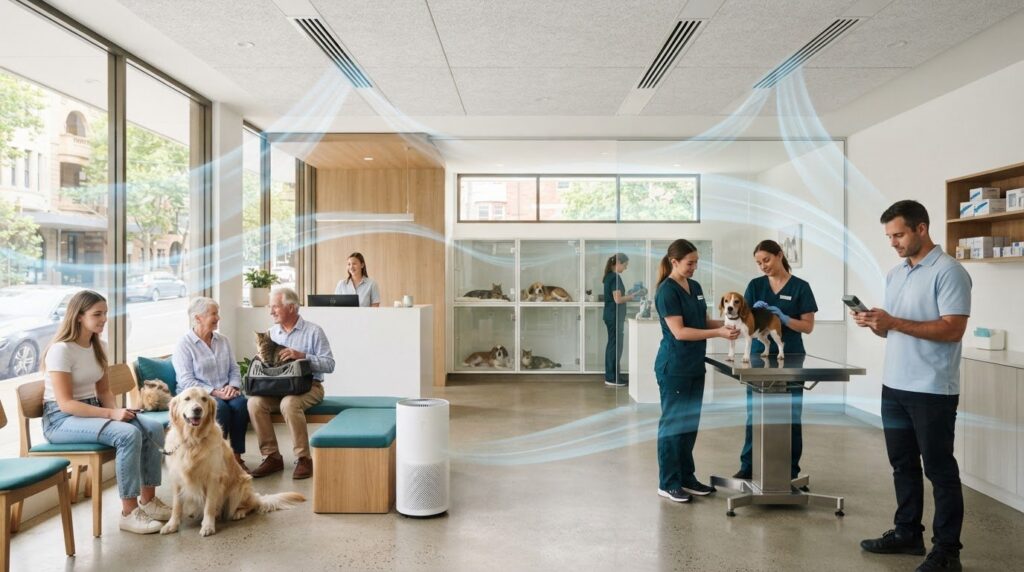
What if the right air-quality solution for your veterinary clinic depends less on the device and more on the room, pollutant and source? Pet dander, persistent odours and airborne particles can build up in busy spaces, but a veterinary clinic air purification service isn’t a one-size-fits-all fix. Start by identifying what’s affecting the air and where.
If you’re weighing up a portable purifier, professional air treatment or both, consider what each option is designed to do. A portable unit filters air drawn through the device, while ventilation manages indoor air movement and replacement. If mould is suspected, inspection and treatment can address the mould itself as well as airborne spores.
This Sydney buying guide explains common clinic air-quality concerns, compares service approaches and helps you consider room-specific needs across waiting rooms, treatment spaces and animal housing. You’ll also see how air purification and scrubbing can fit alongside mould remediation and prevention recommendations, and what information to prepare for an assessment. The goal is to make a more informed decision without assuming one solution suits every part of the practice.
Key Takeaways
- Match the veterinary clinic air purification service to the pollutant and affected room, rather than relying on a one-size-fits-all solution.
- Compare standalone filtration, professional air treatment and mould remediation by their purpose, scope, source treatment and ongoing needs.
- Map odours, dander, visible mould and moisture history by room to make an assessment more focused and useful.
- ABC Mould Cleaning Solutions brings inspection, tailored mould removal, air purification and prevention recommendations together. The Goldmorr System uses biodegradable fogging to address surface mould and airborne spores.
What should a veterinary clinic air purification service address?
Persistent kennel odours, fur and dander around consultation rooms, or dust that returns soon after cleaning can make clinic air feel difficult to manage. Suspected mould adds another concern, especially when there’s a musty smell or visible growth. A veterinary clinic air purification service should start by identifying the specific issue and the rooms affected, rather than assuming one treatment will suit the whole practice.
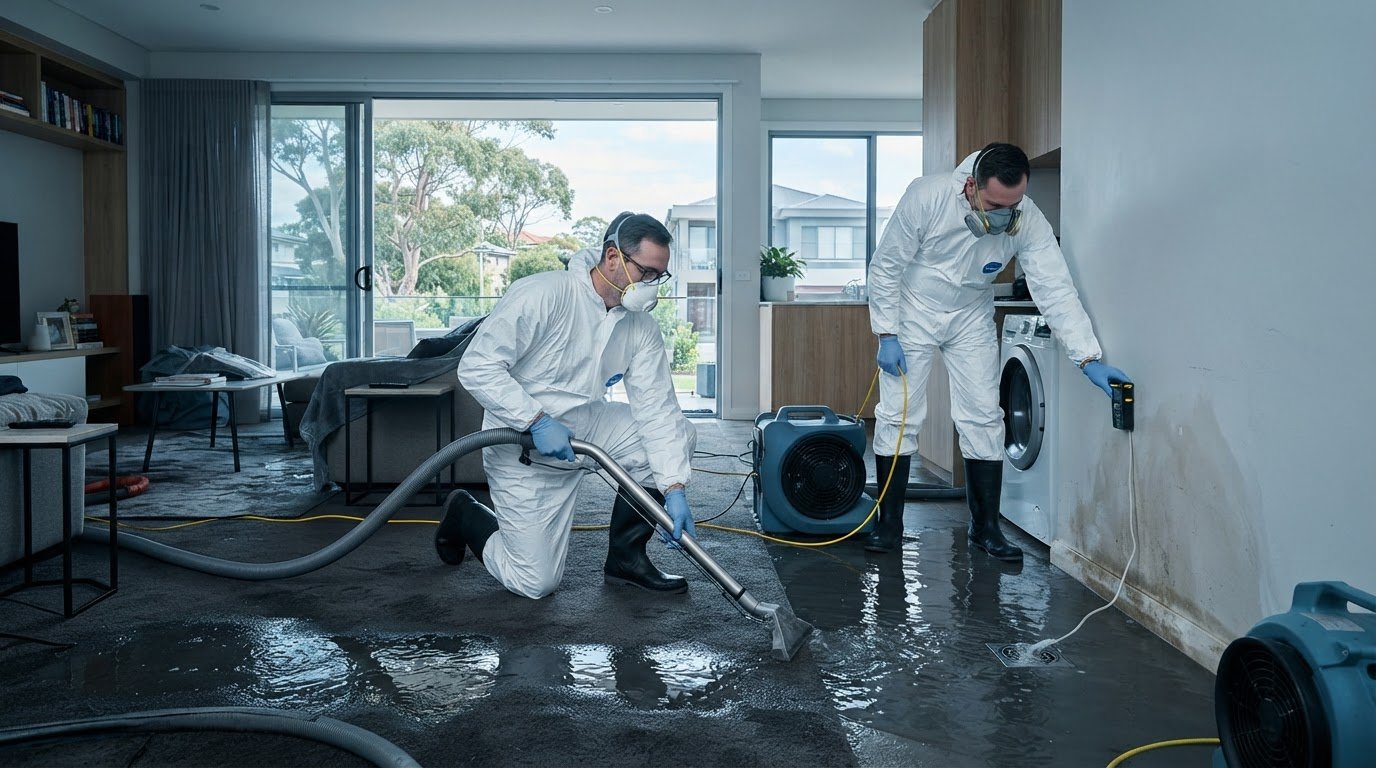
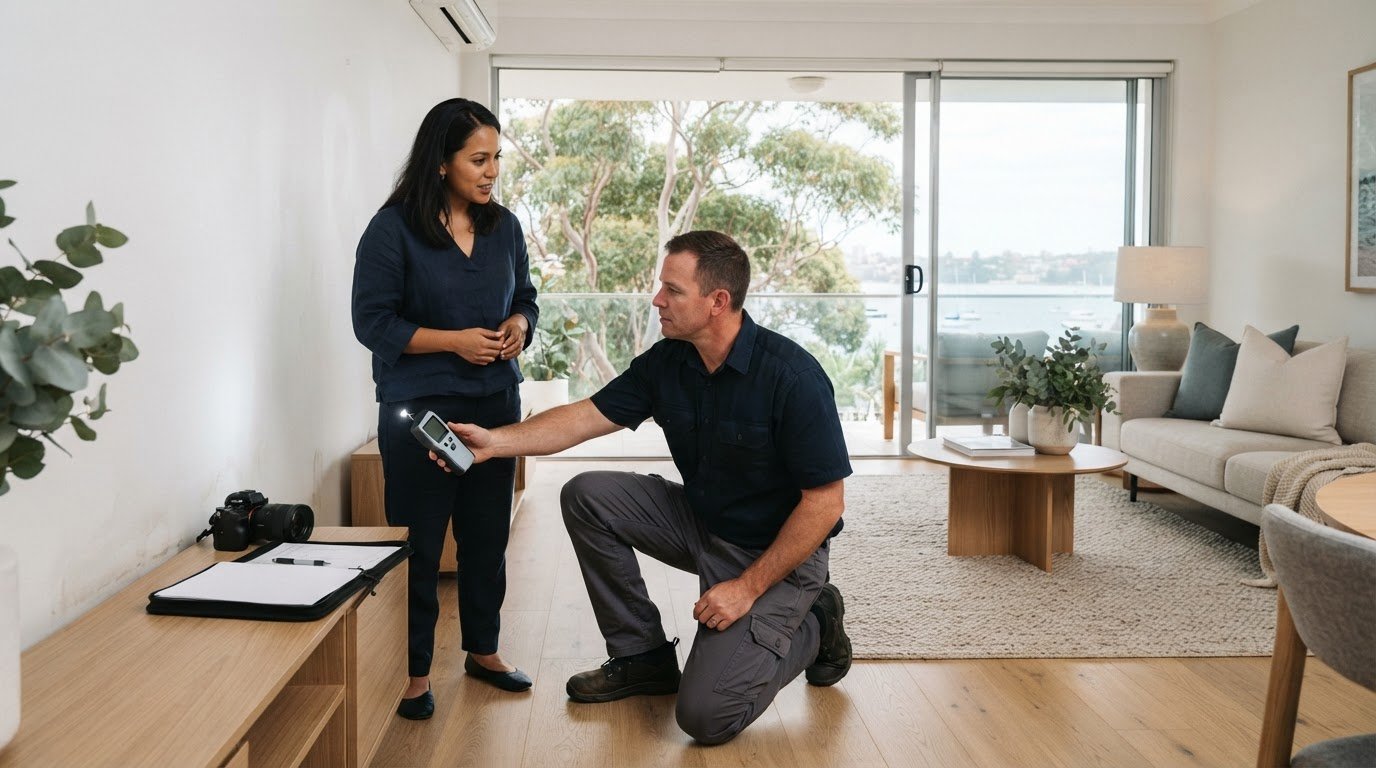
An air purification service should assess the reported concern and define which areas and treatment steps are in scope. When mould is suspected, that may involve inspection, mould remediation and air purification as part of a plan tailored to the property.
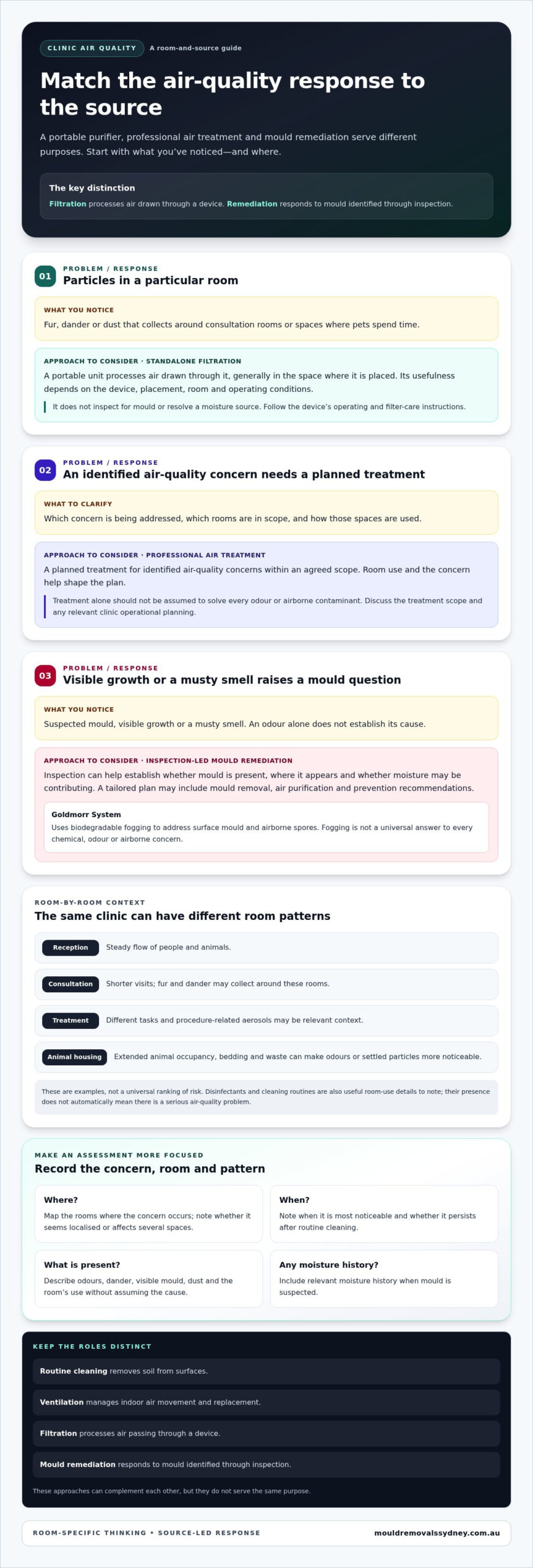
This differs from routine cleaning, which removes soil from surfaces, and general ventilation, which manages the movement and replacement of indoor air. These approaches can complement each other, but they don’t serve the same purpose. For a general overview of how an air purifier works, consider the distinction between equipment that filters air in a space and professional treatment that can also address identified mould.
Which air-quality concerns arise in veterinary clinics?
Animal dander, fur-associated dust and particles from daily activity can collect in rooms where pets spend time. Odours may linger around kennels, bedding or waste areas. These observations help describe the issue, but an odour alone doesn’t establish its cause.
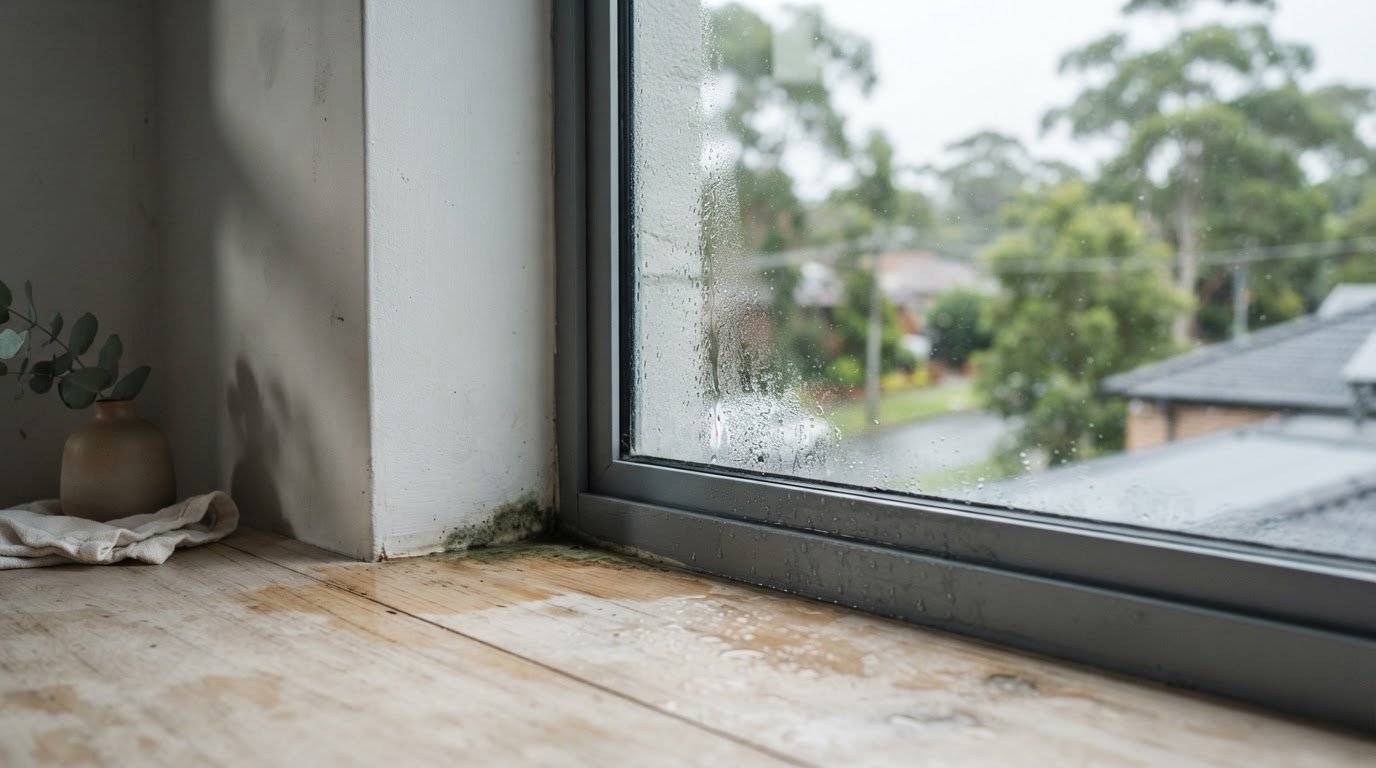
Disinfectants and procedure-related aerosols are also worth noting when describing a room’s use and cleaning routine. Their presence doesn’t automatically mean there’s a serious air-quality problem, but the details help build a clearer picture of what happens in that space. Visible mould is a separate clue from airborne spores. An inspection can help establish whether suspected mould is present, where it appears and whether moisture may be contributing.
Why reception, treatment and kennel areas differ
Each room has its own pattern of occupancy and activity. A reception area may have a steady flow of people and animals, while consultation rooms experience shorter visits and treatment spaces involve different tasks. Kennels can have extended animal occupancy, bedding and waste, so odours or settled particles may be more noticeable there.
These are examples, not a universal ranking of risk. Note where concerns occur, when they’re most noticeable and whether they persist after routine cleaning. A clinic-specific assessment can use those details to distinguish localised issues from concerns that may affect several rooms. That’s more useful than assuming one device or treatment will meet every room’s needs.
Professional air purification service vs portable air purifiers
A portable purifier and a professional service can address different parts of an air-quality concern. The useful comparison isn’t which option is always better, but what needs attention: particles in one room, a suspected mould source, or both. An air purifier alone doesn’t identify or fix moisture that may be contributing to mould growth.
Filtration manages air passing through a device; remediation addresses identified mould. Compare purpose, scope and source treatment before choosing an approach.
| Approach | Purpose and scope | Room and source considerations | Ongoing considerations |
|---|---|---|---|
| Standalone filtration | Processes air drawn through a unit, generally in the space where it’s placed. | Its usefulness depends on the device, placement, room and operating conditions. It doesn’t inspect for mould or resolve a moisture source. | Follow the device’s operating and filter-care instructions. |
| Professional air treatment | Provides a planned treatment for identified air-quality concerns within the agreed scope. | Room use and the concern being addressed help shape the plan. Treatment alone shouldn’t be assumed to solve every odour or airborne contaminant. | Discuss the treatment scope and any relevant operational planning for the clinic. |
| Mould remediation | Responds to mould identified through inspection, with removal, air purification and prevention recommendations as appropriate. | Focuses on mould-affected areas and factors that may contribute to recurrence, rather than simply filtering room air. | Recommendations can help guide attention to conditions that may support future mould growth. |
What a portable air purifier can and cannot do
A standalone unit may be useful for a particular room, but its performance depends on its design, placement, room conditions and how it’s operated. It doesn’t assess hidden areas, establish why an odour persists or determine whether visible growth is mould. Filtration can be one part of an air-quality plan, but it isn’t a substitute for identifying and addressing mould growth or contributing moisture.
When inspection-led purification and mould treatment fit
If mould is suspected, inspection helps establish whether it’s present and informs a treatment plan for the affected areas. ABC Mould Cleaning Solutions brings inspection, tailored mould removal, air purification and prevention recommendations together. The Goldmorr System uses biodegradable fogging to address surface mould and airborne spores. Fogging isn’t a universal answer to every chemical, odour or airborne concern.
For a clinic manager, the practical next step is to connect the reported concern with its location and any signs of moisture. That gives an assessment a clear starting point. If mould is part of the concern, explore mould inspection and remediation as part of a source-focused response.
How to compare veterinary clinic air purification services
A clear comparison starts with the clinic’s specific concerns, not a device or treatment chosen in advance. Map what staff notice, where it occurs and what the proposed work covers. For a veterinary clinic air purification service, compare inspection, any mould removal, air purification and prevention recommendations as connected steps, rather than judging a plan by one treatment alone.
Map the clinic’s rooms, symptoms and operating needs
Make a simple room-by-room record before arranging an assessment. Note what you’ve observed, when it happens and whether there are signs of moisture. Include how animals and staff use each area, so the assessment can consider practical clinic needs alongside the reported concern.
- Reception: Record when odours or dust are noticeable, such as during busy periods.
- Consulting rooms: Note whether a concern is occasional or repeatedly observed in a particular room.
- Treatment spaces: Describe relevant activities and any particles or odours staff have noticed.
- Kennels: Record areas where moisture, visible mould or persistent odours have been observed.
- Operations: Outline animal movement, staff routines and spaces that may need planning around treatment.
Be specific without trying to diagnose the cause. For example, record a musty smell and the area where it occurs, rather than assuming mould is present. Photos and a brief timeline can help communicate what you’ve seen.
Compare scope, evidence and prevention guidance
Look for a clear sequence: what will be inspected, which findings will shape the plan, what treatment steps are proposed and what prevention recommendations follow. ABC Mould Cleaning Solutions uses an inspection-led approach to tailor recommendations to the property and identified mould concerns. This connects air purification with mould removal where appropriate, rather than treating fogging as an answer to every air-quality issue.
- Inspection: Does the plan explain how the affected areas and suspected mould will be assessed?
- Treatment: Is mould removal included where inspection identifies mould, with air purification described as a distinct part of the scope?
- Prevention: Are recommendations included to help address conditions that may contribute to mould recurring?
- Evidence: Are the stated steps clearly separated from unverified claims about health outcomes, pathogen control or removing every contaminant?
Discuss how the plan will account for animal occupancy, re-entry and clinic operations. These are practical details that need to be addressed for the proposed service. Don’t assume treatment can take place around animals or during normal operations. Document the relevant questions and operational constraints before treatment is scheduled.
This process turns observations into a focused assessment and a treatment plan with defined steps. For Sydney clinics with suspected mould, mould inspection and remediation can connect the findings with removal, air purification and prevention recommendations.
Preparing a Sydney veterinary clinic for professional air purification
A little preparation helps make an assessment more focused. For a veterinary clinic air purification service, gather what you’ve observed, where it occurs and how the affected spaces are used. Consider the clinic’s own moisture history and ventilation concerns rather than assuming the same cause or solution applies everywhere.
Information to gather before an assessment
Start with a simple record of affected rooms, when each concern began and whether it returned after cleaning. Include known leaks, water damage or other moisture events linked to those areas. If practical, take clear photos of visible mould or water staining and share them through the website’s inquiry process. These details give the assessment a useful starting point.
- List the affected rooms and describe what you’ve noticed in each.
- Note when the concern appears, how long it has been present and whether it recurs.
- Record known moisture events, including leaks or previous water damage.
- Include a simple room layout and mark visible mould or areas of concern.
A room plan doesn’t need to be technical. A labelled sketch can show how reception, consulting rooms, treatment spaces and kennels connect, and help identify where concerns are concentrated.
Plan treatment around clinic operations
Before treatment planning, outline which rooms are in use, typical schedules and animal-care routines that could affect access. Note whether a room has a particular function or is difficult to take out of use. These are planning considerations, not assumptions about whether treatment can happen during normal operations or while animals are onsite.
Occupancy, animal movement and re-entry instructions should be addressed in the specific treatment plan. Don’t rely on a general rule or assume that animals can remain in the clinic during treatment. The plan needs to set out the relevant instructions for the proposed work, so clinic management can coordinate responsibilities for animals, staff and clients.
Also identify practical constraints early, such as appointment schedules or rooms that need to remain available for care. This helps the assessment consider the clinic’s workflow alongside the affected areas and suspected moisture. Recommendations can then be tailored to the property and identified mould concerns, rather than based on a generic layout or assumed operating conditions.
ABC Mould Cleaning Solutions serves Sydney and surrounding regions, with an approach that can bring inspection, mould removal, air purification and prevention recommendations together where appropriate. If you’ve noticed visible mould, recurring moisture or persistent concerns in specific areas, arrange a mould inspection and assessment to help clarify the issue and inform a tailored plan.
How ABC Mould Cleaning Solutions approaches clinic air purification
For a veterinary clinic, a clear plan begins with the condition of the property, not a promise that one treatment will solve every air concern. ABC Mould Cleaning Solutions takes an inspection-led approach: assess the reported mould concern, tailor removal where appropriate, include air purification as part of the treatment, and provide recommendations to help prevent future mould growth. Each step has a distinct purpose.
From mould inspection to air purification
An initial inspection helps establish whether mould is present, which areas are affected and what the findings mean for the treatment plan. Where appropriate, mould removal and air purification are planned together. This goes beyond treating the air alone: identified mould is addressed, while prevention recommendations help guide attention to conditions that could contribute to future growth.
The Goldmorr System uses a biodegradable fogging process to address surface mould and airborne spores. It forms part of a mould-focused approach, not a universal treatment for every odour, chemical or airborne contaminant that may occur in a veterinary setting. The service plan should reflect the inspection findings and the specific concern being addressed. No treatment should be taken as a guarantee that all contaminants or pathogens will be removed.
This distinction matters when arranging a veterinary clinic air purification service. If the concern is suspected mould, inspection can inform whether mould remediation and air purification belong in the response. If the reported issue has another apparent source, describe it clearly so the assessment can consider it accurately rather than assume mould is responsible.
What to discuss when arranging a clinic assessment
Give a concise picture of the issue and the clinic’s practical needs. Mention the rooms affected, what staff have noticed and any history that could help explain the conditions. Photos of visible mould can also help show the area of concern. You don’t need to diagnose the cause before arranging an assessment.
- Identify affected rooms and describe visible mould, odours or recurring concerns.
- Note known water damage, leaks or other moisture events related to those areas.
- Explain relevant animal-care routines, room use and operational constraints.
- Discuss how occupancy, treatment planning and re-entry instructions will be addressed in the specific plan.
Animal occupancy and re-entry requirements depend on the treatment plan. Don’t assume animals can remain onsite or that a standard timeframe applies. Raise these questions early so clinic responsibilities can be considered as the work is planned.
ABC Mould Cleaning Solutions serves Sydney and surrounding regions. If your clinic has suspected mould or recurring moisture concerns, contact ABC to discuss an assessment and the information that can help shape a tailored plan.
Make the next air-quality decision with confidence
Use the next step to turn general concern into a clear decision for your practice. Before choosing equipment or treatment, decide what you need the assessment to clarify: which rooms need attention, whether mould is part of the issue, and what falls within the proposed work. That focus helps keep the plan relevant to your clinic instead of letting a device or treatment define the problem.
A veterinary clinic air purification service should support informed choices, not replace them with broad promises. Keep the assessment findings and agreed scope available to the people responsible for the building and clinic operations. That gives your team a practical reference point if concerns return or the clinic’s needs change.
If your Sydney clinic is ready to move from uncertainty to a considered plan, take the next step with ABC Mould Cleaning Solutions. Arrange an assessment for your Sydney clinic and start with a clearer understanding of the air-quality concerns affecting your practice.
Frequently Asked Questions
Is professional air purification suitable for a veterinary clinic?
It can be suitable when the treatment is matched to an identified concern and the clinic’s operating needs. For example, if a musty smell is strongest in one room, an assessment can help determine whether mould should be considered rather than treating the entire building by default. Share how the space is used and who needs access, including animals, staff and clients, so those factors inform planning.
Can air purification remove mould spores from a veterinary clinic?
Professional air purification can be included in a mould-focused treatment plan, but it shouldn’t be taken as a guarantee that every airborne spore will be removed. ABC Mould Cleaning Solutions uses the Goldmorr System’s biodegradable fogging process to address surface mould and airborne spores. If mould is suspected, an inspection can help establish whether it is present and guide treatment decisions, rather than relying on air treatment alone.
Does an air purifier remove pet odours and dander?
A standalone purifier may help manage some airborne particles, including dander, depending on the unit, placement and operating conditions. Odours are less straightforward: a purifier isn’t a substitute for identifying their source, which could relate to waste, bedding, cleaning products or another issue. If odours persist, note where and when they occur. That information helps distinguish a localised concern from one that needs a broader assessment.
How should a veterinary clinic prepare for an air purification assessment?
Prepare a room list with the symptoms staff have noticed, when they began and whether they return after cleaning. Note visible mould, water staining, leaks or previous water damage, and take photos where practical. A simple floor plan can show room use and affected areas. Also outline appointment patterns, animal-care routines and any rooms that are difficult to take out of use, so operational needs are part of the discussion.
Will animals need to leave during mould treatment?
That depends on the specific treatment plan, so don’t assume animals can remain onsite or rely on a general re-entry timeframe. Before work is planned, discuss animal occupancy, access to affected rooms and how the clinic will manage animal care during treatment. Follow the instructions provided for the proposed work. This lets clinic staff plan responsibilities without making assumptions about animal safety or re-entry.
Does professional air purification replace ventilation?
No. Air purification and ventilation serve different purposes. A purifier or air treatment addresses air within its scope, while ventilation manages the movement and replacement of indoor air. One shouldn’t be treated as an automatic substitute for the other. If concerns involve stale air or room airflow, describe those observations separately from suspected mould or particles so the assessment can keep the issues distinct.
What does a veterinary clinic air purification service include?
A veterinary clinic air purification service can include different steps depending on the concern and assessment findings. ABC Mould Cleaning Solutions’ mould-focused approach brings inspection, tailored mould removal, air purification and recommendations to help prevent future growth together. The Goldmorr System uses biodegradable fogging to address surface mould and airborne spores. The service scope should reflect identified mould concerns, not imply treatment for every odour or contaminant.