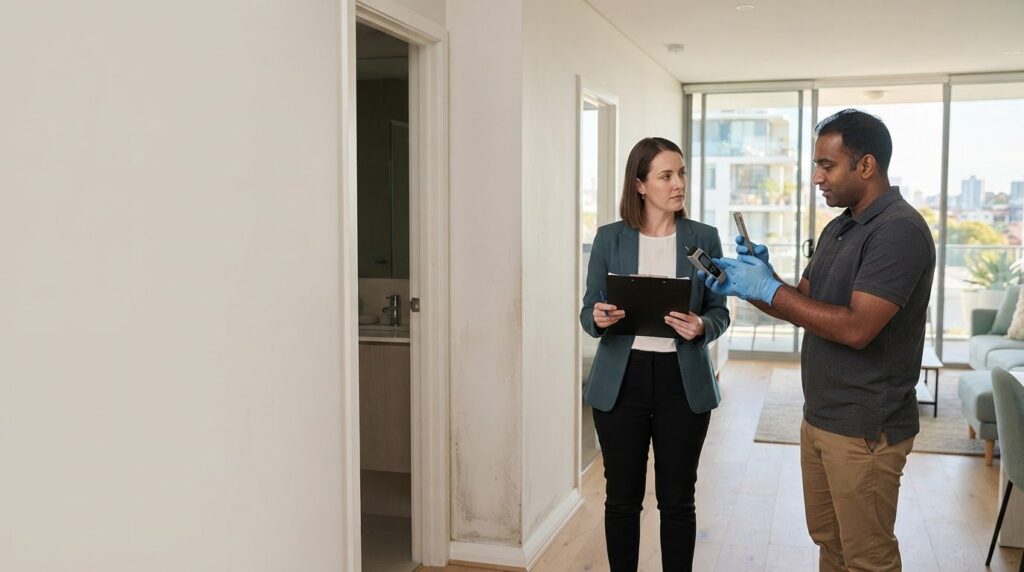
When a resident reports a musty smell, dark patches or recurring damp, the first step isn’t necessarily to scrub the surface. The important question is what’s causing the problem. Understanding what does a building manager do about mould helps clarify what happens next: the manager records the concern and coordinates a response, while the relevant owner or owners corporation may need to approve work and a specialist may need to investigate the cause.
It’s understandable to be unsure who is responsible, especially in a strata building or rental property. A building manager can gather details, inspect accessible areas and escalate the report to the owners corporation, landlord or property manager. Their authority depends on their role and delegation. The person or organisation responsible for the property generally needs to approve repairs, and a specialist may be useful when moisture is hidden or mould keeps returning.
This guide explains how to report mould clearly, what information helps an investigation and how a building manager can coordinate updates and next steps. It also covers when a professional inspection or remediation may be appropriate, why addressing the moisture source matters, and how responsibilities can differ between common property and a private lot. A clear process helps ensure the issue is investigated rather than treated as surface dirt alone.
Key Takeaways
- Learn what does a building manager do about mould, from recording a report to coordinating an assessment and keeping residents updated.
- Know which details to include in a report, such as affected areas, photos, dates, odours and known moisture events.
- Understand how responsibilities may differ between a building manager, owners corporation, landlord, tenant and specialist.
- See how investigating the moisture source, arranging authorised repairs and considering remediation can help address recurring mould.
- Find out what residents can document during an investigation and why disturbing affected materials can complicate an assessment.
What Sydney building managers do about mould
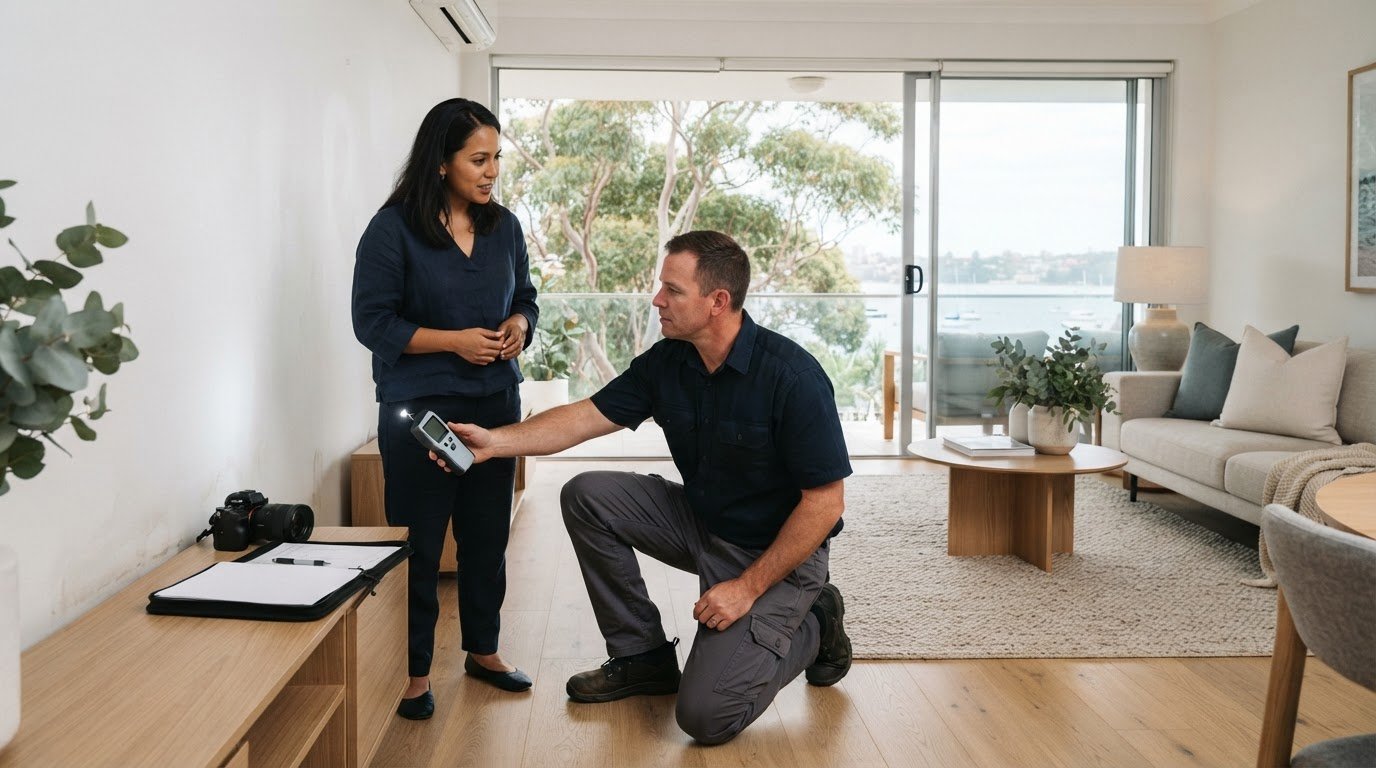
In a Sydney apartment building, a building manager is often the first practical contact when a resident reports mould in a hallway, ceiling or private lot. Their role is generally to receive the report, record relevant information, coordinate an assessment and explain what happens next. They may inspect accessible areas or arrange access for an appropriate specialist. The manager’s authority depends on their agreement and any delegation from the owners corporation or property owner.
A building manager coordinates the response to a mould report, while authorised decision-makers and specialists determine and carry out the required actions. This distinction helps set clear expectations. A manager may arrange an inspection or pass on recommendations, but may need approval before committing to repairs or remediation. So, what does a building manager do about mould? They help move the issue through the right channels without automatically taking on every decision or repair.
Building manager, strata manager or owner: who does what?
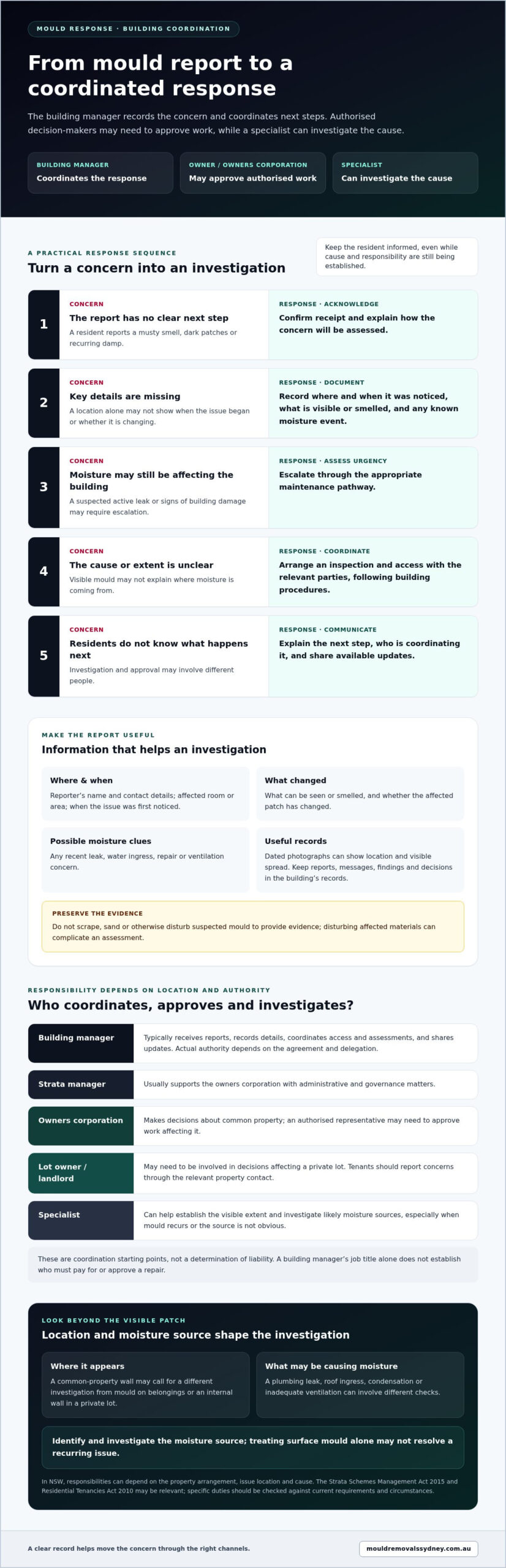
These roles can overlap, but they aren’t interchangeable. A building manager typically handles day-to-day site coordination, such as receiving reports and arranging access. A strata manager usually supports the owners corporation with administrative and governance matters. Owners corporations make decisions about common property, while a landlord or lot owner may make decisions affecting a private lot. Tenants should report concerns through the relevant property contact. The manager’s actual authority depends on their contract and delegation.
For example, if a resident reports a damp patch under a shared pipe, the building manager might document the location and coordinate an inspection. The owners corporation or its authorised representative may need to approve work if the pipe or affected area is common property. If mould is inside a privately owned lot, the lot owner or landlord may need to be involved. These are starting points for coordination, not a determination of liability.
In NSW, legal responsibilities can depend on the property arrangement, the location of the issue and its cause. The Strata Schemes Management Act 2015 and Residential Tenancies Act 2010 may be relevant. Specific duties should be checked against current NSW requirements and the circumstances. A building manager’s job title alone doesn’t establish who must pay for or approve a repair.
Why the mould’s location and cause matter
Mould is fungal growth that can appear on surfaces or be associated with moisture inside building materials. For a general overview of Indoor Mold, including common causes and remediation, see this background reference. The article What is Mould? A Complete Guide for Australian Homeowners also explains the basics. In a building, identifying where mould appears is only one part of the investigation.
Mould on a common-property wall may call for a different investigation from mould on a lot owner’s belongings or an internal wall. A plumbing leak, roof ingress, condensation and inadequate ventilation can involve different checks. A specialist inspection can help establish the visible extent and investigate likely moisture sources, particularly when mould recurs or the source isn’t obvious. The manager can coordinate the assessment and share findings with the relevant decision-makers, rather than assigning responsibility before the evidence is clear.
How should a building manager respond when mould is reported?
A prompt, documented response turns a vague concern into an investigation that can be acted on. The manager should acknowledge the report, establish what is known, consider whether there may be an urgent moisture issue and coordinate next steps within their authority. They should keep the resident informed even if the cause or responsibility hasn’t yet been established.
Response checklist: acknowledge the report, record the details, assess urgency, arrange the right inspection, then update the resident and decision-makers.
- Acknowledge: Confirm receipt and explain how the concern will be assessed.
- Document: Record when and where mould was noticed, along with photos and reported odours or moisture.
- Assess urgency: Escalate a suspected active leak or signs of building damage through the appropriate maintenance pathway.
- Coordinate: Arrange an inspection and access with the relevant parties, following building procedures.
- Communicate: Explain the next step, who is coordinating it and share any available updates.
What information should the manager record?
Start with the reporter’s name and contact details, the affected room or area, and when the issue was first noticed. Ask what they can see or smell, whether the affected patch has changed, and whether there has been a recent leak, water ingress, repair or ventilation concern. Dated photographs can help show the location and visible spread, but nobody should scrape, sand or otherwise disturb suspected mould to provide evidence.
Keep the report, follow-up messages, inspection findings and decisions in the building’s records. A clear timeline helps the relevant owner, committee, landlord or specialist understand what has been reported and what action has followed. Separate observations from conclusions. “Damp patch below the window, first seen on Tuesday” is more useful than an unverified diagnosis of the cause.
When should the manager arrange a closer assessment?
Arrange a timely assessment if mould is extensive, keeps returning, appears alongside unresolved moisture, or occurs with signs of active water ingress or building damage. Escalate suspected leaks through the appropriate maintenance process rather than treating visible mould as a standalone cleaning issue. A qualified inspection can help establish the extent of the problem and investigate a likely moisture source.
Photos are useful records, but they can’t reliably identify mould type, reveal what’s behind a wall or establish health effects. The US EPA’s mould remediation guidance for commercial buildings offers general background for building operators. It isn’t a substitute for current Australian requirements or a site-specific assessment.
Access needs coordination too. Follow the building’s entry and privacy procedures, explain the purpose of an inspection, and arrange access with the relevant resident or lot contact. If the assessment indicates that specialist inspection or remediation may help, the manager can share the findings and coordinate with the authorised decision-maker. For Sydney properties, professional mould inspection and remediation can help clarify the extent of mould and inform the next steps.
Who should investigate and fix mould in a strata or rental property?
There isn’t one person who automatically handles every mould issue. The response depends on where the mould appears, what is causing the moisture, the property arrangement and who has authority to approve work. A building manager may coordinate access and pass on findings, while investigation and repair decisions can sit with different parties.
Use this as a practical guide to roles, not a legal determination:
| Party | Typical role in the response |
|---|---|
| Building manager | Coordinates site access, shares reports and inspection findings, and follows delegated instructions. |
| Owners corporation or authorised representative | Considers and approves action where common property or owners corporation decisions are involved. |
| Landlord or lot owner | Considers work affecting a rental property or private lot, subject to applicable responsibilities and agreements. |
| Tenant or resident | Reports the concern, provides relevant observations and coordinates access through the appropriate channel. |
| Mould specialist | Assesses affected areas and likely moisture sources, then advises on suitable inspection or remediation steps. |
The table describes common coordination patterns, not fixed legal duties. The manager’s contract and delegation can define what they’re authorised to arrange. Owners corporation records, tenancy agreements and the building’s maintenance procedures can also shape who approves work and how it proceeds.
How do strata and rental responsibilities differ?
In strata, a concern involving a shared roof, pipe or corridor may need to go to the owners corporation or its authorised representative. Mould inside a private residence may involve the lot owner or, in a rental, the landlord and property manager. The visible location alone doesn’t prove where a leak started or who is responsible. Keep the issue moving while that is established.
In NSW, the Strata Schemes Management Act 2015, tenancy rules and NSW Fair Trading guidance may be relevant, depending on the facts. Check current requirements and how they apply before making a legal conclusion. Don’t assume every building follows the same approval pathway.
When is a mould specialist useful?
A specialist inspection can help identify the extent of affected areas and investigate likely moisture sources, particularly if mould returns, appears across a wider area or its cause is unclear. A leaking pipe, condensation and inadequate ventilation may call for different investigations. Treating visible growth without addressing ongoing moisture can leave the underlying problem unresolved.
Once the responsible decision-maker has the assessment, professional remediation may be appropriate for recurring or widespread mould. ABC Mould Cleaning Solutions provides mould inspection and remediation, with a comprehensive service that includes inspection, removal, air purification and recommendations to help prevent future growth. This gives the building response a clearer basis for deciding what work is needed, while leaving approvals with the authorised parties.
So, what does a building manager do about mould? They help connect the report, decision-makers and specialist assessment. The cause and applicable responsibilities still need to be established before the repair pathway is settled.
What should residents do while the building manager investigates mould?
Residents can help an investigation move forward by reporting what they’ve noticed promptly and keeping a clear record. Use the building’s established reporting channel, such as its maintenance portal, email address or designated contact. A written report creates a useful timeline and helps the manager understand whether the concern involves a musty odour, visible growth, damp materials or a water event.
What should a resident include in a mould report?
Be specific and factual. Identify the room and affected surface, describe when the mould or smell first appeared, and note whether it has changed. Include clear, dated photographs taken from a safe distance. Mention any known leak, flooding, damp patch or recurring condensation, and whether the issue has appeared before.
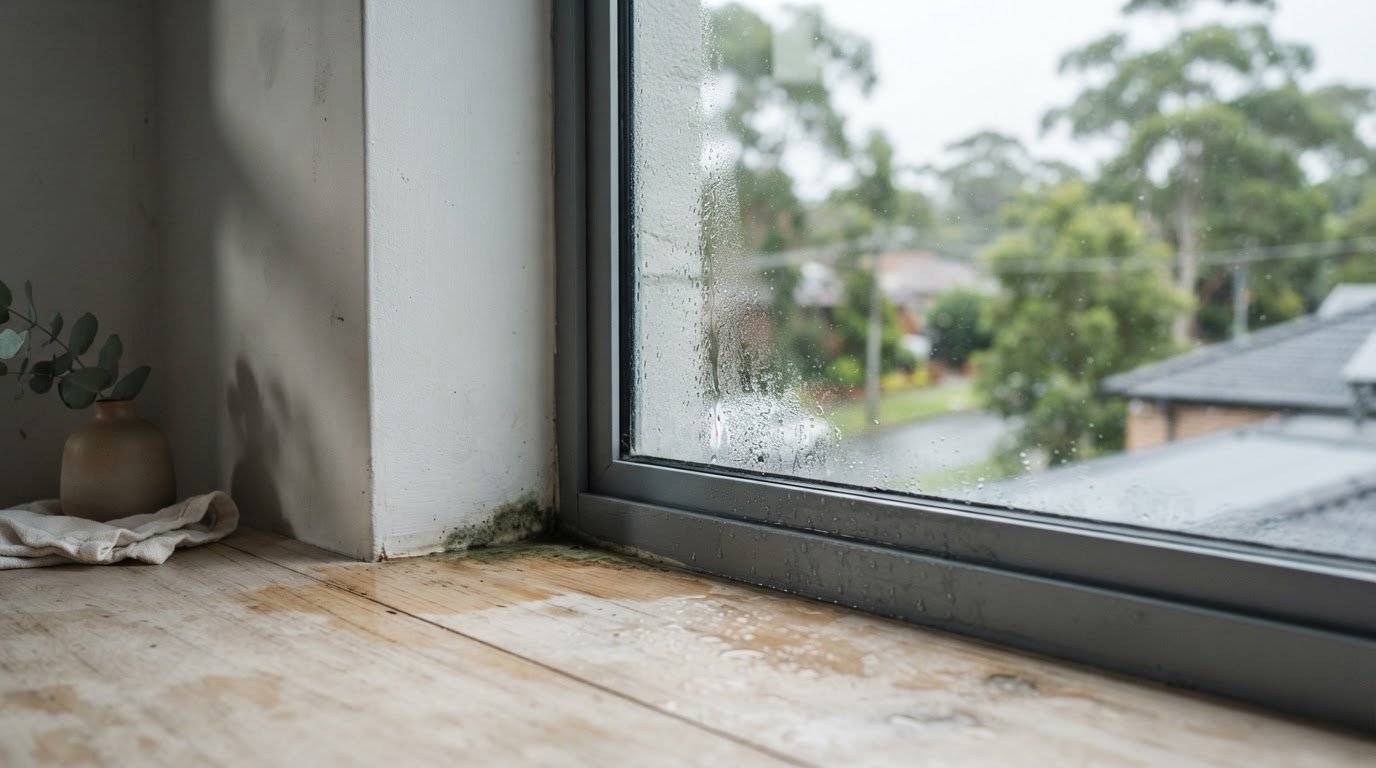
For example: “There’s a dark patch on the bedroom wall beside the window. I first noticed it on Monday, and the wall feels damp after rain.” This gives the manager useful observations without assuming the cause. Keep copies of the report, replies, notices and agreed access arrangements. If the affected area changes or new moisture appears, send a dated update through the same channel.
What should residents avoid while they wait?
Don’t scrape, sand, peel or otherwise disturb suspected mould to investigate it. That can alter the affected material and make it harder to assess. Don’t cover up the area before it has been documented, either. Follow any property-specific safety instructions and cooperate with reasonable inspection arrangements, using the building’s usual access and privacy procedures.
If there’s active water ingress, such as water coming through a ceiling or a continuing leak, report it promptly through the urgent maintenance pathway rather than waiting for a routine mould update. Water damage can require a separate response; the guide Water Damage Repair: Your Emergency Guide for Sydney Homes explains why documenting and addressing water intrusion matters. For concerns about symptoms or health, speak with an appropriate health professional. Residents and managers shouldn’t try to diagnose a medical condition from the presence of mould.
When should a concern be escalated?
If you haven’t received an acknowledgement or the problem is worsening, follow up in writing with the building manager and use the designated complaints or maintenance pathway. Depending on the property, that may involve the owners corporation, landlord or property manager. Keep the follow-up factual: refer to the original report date, describe what has changed and attach new photographs if safe to take. Escalate active water ingress or rapidly worsening building damage promptly through the relevant maintenance contact.
Clear records help everyone track what has been reported and what response is underway. If an inspection identifies mould that needs specialist assessment or remediation, arrange professional mould inspection and remediation as part of the coordinated response.
How can a building manager move from mould report to lasting resolution?
A useful response doesn’t stop once the visible mould is gone. The building manager can coordinate a sequence that connects the initial report to investigation, authorised repairs, suitable remediation and follow-up. The aim is to address both the affected area and the conditions that may be allowing mould to grow, while keeping residents and decision-makers informed.
A practical pathway is:
- Investigate the moisture: Arrange an appropriate assessment to examine the affected area and identify a likely source, such as a leak, dampness or condensation.
- Confirm authority and repairs: Share the findings with the relevant owner, landlord or owners corporation, then coordinate approved work with the appropriate maintenance parties.
- Plan mould treatment: Consider whether professional remediation is needed based on the extent of mould and inspection findings.
- Check the outcome: Follow up on completed repairs and remediation, record any remaining concerns and monitor whether dampness or visible mould returns.
Why fixing moisture is part of the response
Cleaning visible mould may improve a surface’s appearance, but it may not resolve the underlying problem if moisture continues. A leak, water intrusion, condensation or ventilation issue can each call for a different investigation. For example, removing growth from a wall without addressing a continuing leak may leave the conditions for recurrence in place.
The building manager can help connect inspection findings with the right repair pathway. This may mean coordinating with trade professionals, such as Synergy Trades Group for specialized plumbing maintenance, to investigate a leak, repair affected building elements or address underlying moisture faults. The manager should share recommendations with the authorised decision-maker rather than assume they can approve every repair themselves. If ductwork is suspected to be affected, it may also need to be considered as part of the assessment and response.
When professional mould remediation can support the plan
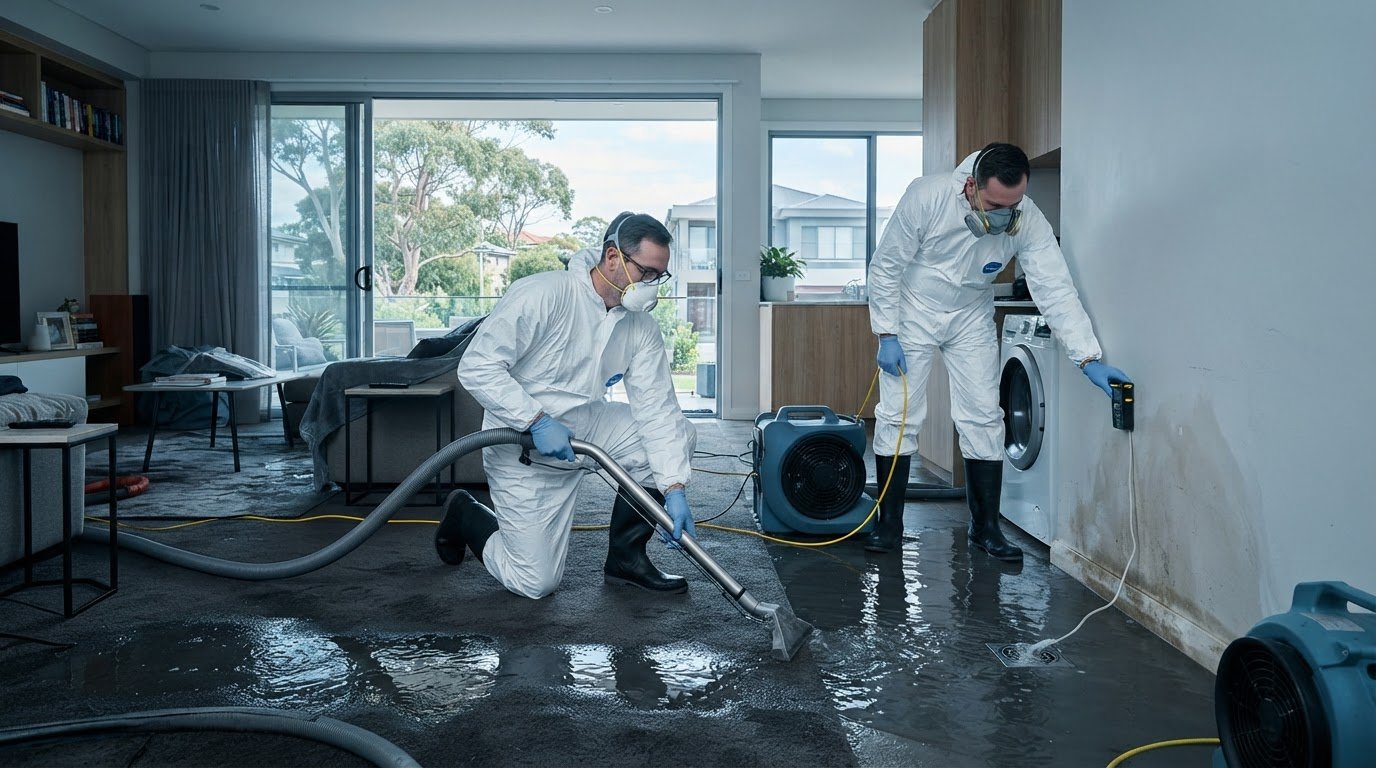
A specialist inspection can help assess the affected area and inform next steps, especially when mould is widespread, keeps returning or its source is unclear. Once the relevant decision-maker has considered the findings, professional mould remediation may form part of a coordinated response. Air purification and scrubbing may also be considered where appropriate to the situation.
ABC Mould Cleaning Solutions provides mould inspection and remediation using the Goldmorr System, alongside water damage restoration. Its mould removal process uses biodegradable fogging to target surface mould and airborne spores. The specific work can be informed by the property and assessment findings. Remediation should sit within a broader plan that also considers moisture and relevant repairs, rather than being treated as a promise that mould will never return.
Ultimately, what does a building manager do about mould? They coordinate the steps, records and communication that help move the response from report to informed action. Sydney property representatives planning an inspection or remediation can explore mould inspection and remediation support.
Keep the next step clear
A mould report can lose momentum when residents, managers and decision-makers aren’t sure who will follow up. Agree on one contact for updates and a clear next action, such as confirming an inspection or sharing the repair plan. That simple handover helps everyone know what is happening without confusing coordination with approval or specialist assessment.
Understanding what does a building manager do about mould is ultimately about knowing how to move a concern forward. If the extent or source of mould remains unclear, an inspection can help inform the response and guide decisions about remediation. ABC Mould Cleaning Solutions provides inspection, mould remediation and air purification, with mould removal using the Goldmorr System’s biodegradable fogging process.
Arrange a professional mould inspection in Sydney to take a considered next step. Clear communication and a suitable assessment can help move the property towards an informed response.
Frequently Asked Questions
Can a building manager remove mould themselves?
Not necessarily. A building manager should only undertake mould removal if it falls within their authority, skills and applicable safety procedures. Their usual role is to coordinate the response, not assume that wiping a patch is an adequate remedy. While general facility upkeep and regular janitorial solutions—such as those delivered by commercial providers like RPS Building Services—maintain day-to-day cleanliness, dealing with established mould requires specialized assessment rather than ordinary surface wiping. Small visible spots may conceal moisture or affected materials, so avoid disturbing suspected mould before its extent and cause are understood. For larger, recurring or hidden growth, a specialist assessment can guide the next action.
Who is responsible for mould in a strata building in NSW?
Responsibility depends on the location and cause, so a report alone won’t establish who must arrange or pay for work. The owners corporation is generally involved when the suspected source concerns common property, while a lot owner or landlord may need to address an issue within a private residence. In NSW, the Strata Schemes Management Act 2015 may be relevant. Check its current application alongside strata records and the specific circumstances.
How should I report mould to my building manager?
Send a written report through the building’s normal maintenance channel and identify the exact location, such as the bathroom ceiling above the shower or a bedroom wall beside a window. Include when you first noticed it, whether it’s changing, and any relevant moisture event. Attach dated photographs if you can take them without disturbing the area. Keep a copy of your message and note any reference number or reply for later follow-up.
What happens if a building manager does not respond to a mould report?
Follow up in writing, refer to the date of your first message and state whether the condition has worsened or new water damage has appeared. If there’s still no response, use the property’s formal complaints or maintenance escalation process and contact the relevant landlord, property manager or owners corporation representative. NSW tenants can seek guidance from NSW Fair Trading and consider their options through NCAT. Check current procedures before taking formal action.
Does a building manager have to arrange a mould inspection?
There isn’t one automatic answer for every building. Whether the manager must arrange an inspection depends on their agreement, delegated authority, the property’s procedures and who is authorised to approve the work. They can pass on the report and seek a decision from the relevant owner or owners corporation. If the manager can’t approve an inspection, the report should identify who is responsible for assessing the concern and coordinating the next step.
Can mould in one apartment affect other parts of a building?
It can be associated with a wider building issue, but mould in one apartment doesn’t automatically mean neighbouring lots are affected. Moisture may travel from a leak, shared building element or connected cavity, while spores can move through air. If nearby residents notice similar musty odours or damp patches, report each location separately. A specialist can assess whether the signs point to a local problem or a source that needs broader investigation.
When should a building manager call a mould remediation specialist?
A specialist is worth considering when mould keeps returning, covers a broad area, appears on materials that may be affected beneath the surface, or has no clear moisture source. Inspection can help establish the extent of the issue and inform whether remediation is appropriate. For a Sydney property, ABC Mould Cleaning Solutions provides inspection and mould remediation, with air purification among its services. The authorised property representative should coordinate the work and related approvals.