What should you do when mould appears at work? Workplace health and safety mould regulations Australia are not limited to one mould-specific rule. The key is to identify and control the risk under the laws that apply to your workplace. A damp patch, musty smell or visible growth can raise immediate questions: who is responsible, which regulator applies, and should workers be kept out while the cause is investigated?
Under WHS laws, a PCBU’s general duty is to ensure, so far as reasonably practicable, that health and safety risks are managed. Safe Work Australia’s March 2026 Model Code of Practice for Managing the Risks of Biological Hazards at Work explicitly includes mould, while the laws and regulator guidance that apply depend on your state or territory. A practical response should be assessed and documented, not based on guesswork.
This guide explains how to identify your jurisdiction, assess and control exposure, address moisture, communicate with workers and keep useful records. It also covers when access restrictions, careful cleaning, further inspection or specialist mould remediation may be appropriate. Use these steps to protect workers and visitors and respond proportionately when mould is reported.
Key Takeaways
- Use the workplace health and safety mould regulations Australia framework to identify the applicable state or territory laws and regulator before deciding on a response.
- Consult affected workers and health and safety representatives where required, and document reports, decisions and actions.
- Prioritise addressing the moisture source. Restrict access or avoid disturbing mould when the affected area or materials make routine cleaning unsuitable.
- Follow a documented sequence: report the issue, assess the risk, manage access, address contamination and moisture, then review whether the controls worked.
- For Sydney workplaces, specialist inspection, mould remediation and air purification can support a coordinated response. ABC uses the Goldmorr System, which includes biodegradable fogging.
What workplace health and safety mould regulations apply across Australia?
Workplace mould duties generally sit within broader work health and safety (WHS) frameworks, rather than a single mould-only national regulation. A person conducting a business or undertaking (PCBU), including an employer, must manage workplace health and safety risks under the laws that apply in their jurisdiction. Mould can be a biological hazard, so a musty odour or visible growth should prompt a considered response, not assumptions about a universal mould rule.
Australia’s model WHS laws provide a common foundation, but states and territories enact and administer their own legislation and appoint their own regulators. Regulations and approved codes can also differ. Safe Work Australia develops model laws and guidance; it is not the workplace regulator for each state or territory. Its 2026 model Code of Practice on biological hazards at work includes mould, but the status of a model code locally depends on how it is adopted.
Legislation and regulations create enforceable legal duties. Regulator guidance explains expectations, while an approved code of practice can provide practical compliance guidance and may be used as evidence in legal proceedings. Look to the current law and regulator material for the workplace’s location. A general procedure or national model document does not automatically have the same status as local law.
Is there a single mould-specific WHS regulation in Australia?
Generally, no. Workplace mould risks are managed through broader WHS duties, including identifying hazards and taking reasonably practicable steps to control risks. Those duties apply even when a law does not set out a separate mould-specific rule or numerical mould threshold. General information about Mould (fungus) can explain what mould is, but workplace obligations come from applicable laws, not an encyclopaedia entry.
A code, regulator fact sheet or cleaning procedure may not have the same legal status in every jurisdiction. When using one to guide a response, establish whether it applies locally and whether it has been approved there. This distinction helps businesses use practical advice without mistaking it for a binding legal requirement.
Which workplace mould rules apply in NSW?
For a workplace in Sydney or elsewhere in New South Wales, SafeWork NSW is the relevant state workplace safety regulator. Its mould guidance can help a PCBU understand the hazard and practical risk-management expectations. Guidance can assist compliance, but it is not legislation in itself. The applicable NSW Act, regulations and any approved codes establish the legal context.
Queensland workplaces, for example, look to WorkSafe Queensland and Queensland’s own WHS framework. This shows why location matters: guidance from one regulator may be informative elsewhere, but does not automatically determine another jurisdiction’s requirements. For a Sydney workplace, use current NSW legislation and SafeWork NSW material. Businesses operating across state or territory borders need to consider the regulator and laws relevant to each workplace.
What must employers and PCBUs do when mould is found at work?
Finding mould calls for a risk-based response, not an assumption that every affected space needs the same controls. Under applicable WHS laws, a PCBU must ensure, so far as is reasonably practicable, that workers and others are not exposed to unmanaged health and safety risks. The precise requirements depend on the workplace’s jurisdiction, so use current local legislation and regulator guidance when deciding what action is required.
Choose controls based on the assessed exposure and the conditions at the workplace, including who uses the area, which materials are affected and whether the moisture source is ongoing. The practical goals are to prevent exposure, limit disturbance, address conditions that contribute to mould and keep workers informed.
How should a workplace assess mould-related risk?
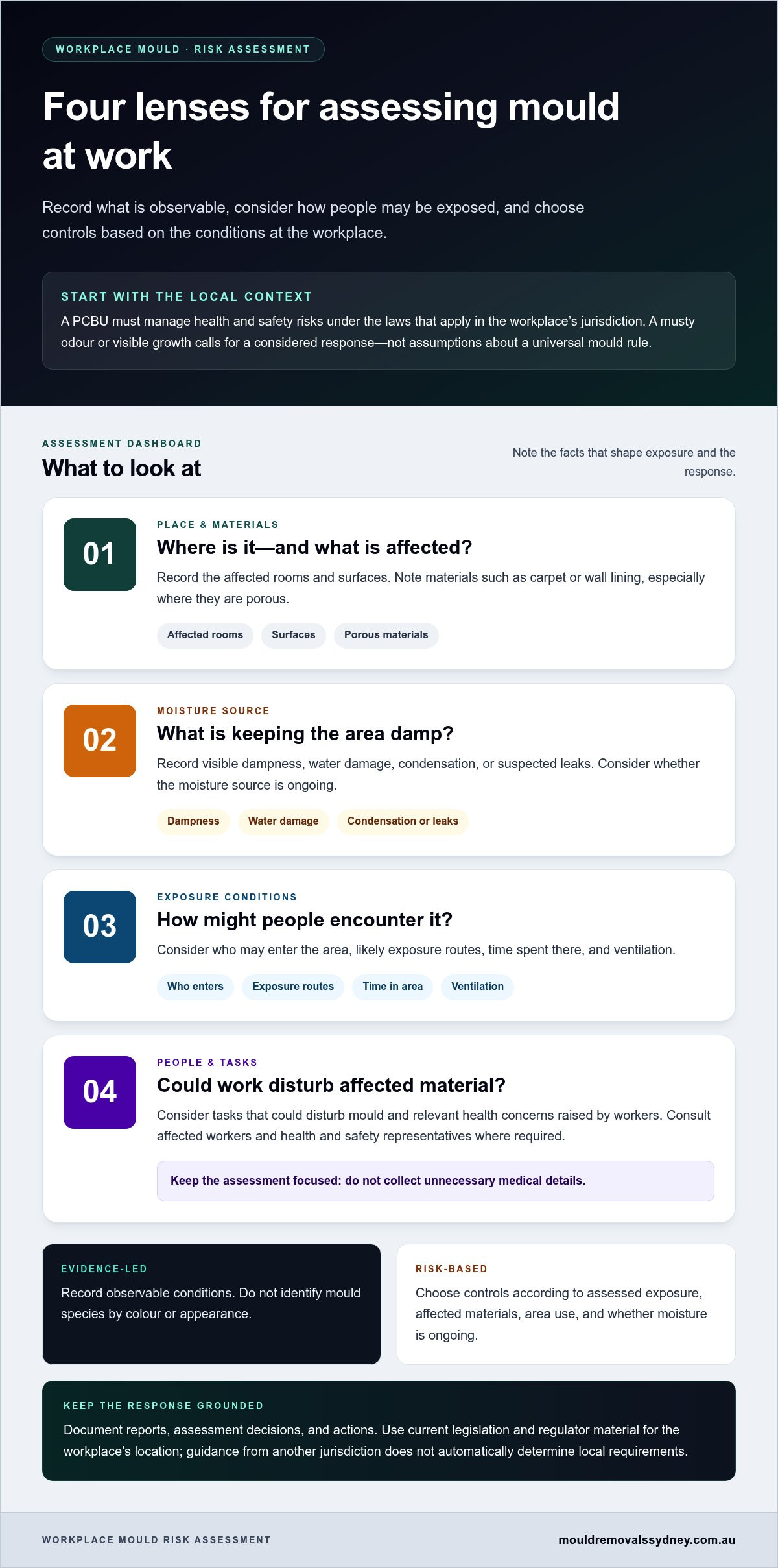
Start with observable facts. Record where mould appears, its apparent extent, the materials involved and signs of dampness, leaks or condensation. Consider how the space is used and whether work activities could disturb affected material. Do not identify mould species by colour or appearance, or infer a worker’s diagnosis from symptoms. The Guidelines for Managing Mould and Dampness provide building-focused public health information, but do not replace local WHS requirements.
- Location and materials: Note affected rooms and surfaces, including porous materials such as carpet or wall lining.
- Moisture indicators: Record visible dampness, water damage, condensation or suspected leaks.
- Exposure conditions: Consider who may enter, likely routes of exposure, time spent in the area and ventilation.
- People and tasks: Account for work that could disturb mould and any relevant health concerns raised by workers, without collecting unnecessary medical details.
What should workplace records and consultation cover?
Consult affected workers and health and safety representatives where required by applicable law. Workers may know when a leak began, which areas smell musty after rain or whether maintenance work disturbed materials. Explain the hazard and current controls in plain language. Identify who is responsible for each action and give staff a clear way to report changes or new concerns.
Keep dated records of observations, reports, assessment decisions, controls, assigned responsibilities and review dates. Note why access was restricted or work continued under controls, and update the record if conditions change. Keep personal medical information confidential. Health concerns should be referred to an appropriate health professional rather than diagnosed at work.
The PCBU is responsible for managing workplace risks and arranging suitable controls. Workers also have duties under applicable WHS laws, including taking reasonable care and following reasonable safety instructions. Workers should report suspected mould and comply with access restrictions or other directions. These duties do not transfer the PCBU’s risk-management responsibility to staff.
When observations suggest widespread, concealed or recurring contamination, a professional commercial mould inspection and remediation response can help clarify affected areas and inform control decisions.
How do Australian workplaces control mould exposure and compare response options?
Choose controls according to the affected area, materials, moisture source and likelihood of exposure. Start by addressing water entry or condensation where possible. Then prevent unnecessary access or disturbance while the area is assessed. Scrubbing dry mould or pulling up affected materials without suitable controls can spread dust and spores, so routine cleaning should not be the automatic first step.
For workplaces applying the workplace health and safety mould regulations Australia framework, PPE may help manage residual exposure during authorised work. It does not replace controls such as correcting moisture, restricting access or using appropriate containment. Follow site procedures and the risk assessment, and review controls when conditions change.
| Option | Suitable circumstances | Limitations | Required review |
|---|---|---|---|
| Source control | An active leak, condensation or dampness has been identified. | Addressing moisture alone does not remove existing contamination. | Check that the source has been addressed and dampness is not returning. |
| Access restriction | The extent or exposure risk is unclear, or disturbance could spread contamination. | Does not resolve mould or its cause, and may disrupt work. | Review the boundary and access conditions as the assessment progresses. |
| Trained in-house cleaning | A small, accessible area can be handled under site procedures and a suitable risk assessment. | May be unsuitable for porous, concealed, extensive or recurring contamination. | Check that cleaning, waste handling and moisture controls were effective. |
| Specialist remediation | Contamination is extensive, concealed, recurring or linked to complex water damage. | Work still needs a clear scope and coordination with the workplace. | Review the completed work and whether the moisture issue remains controlled. |
When can routine workplace cleaning be appropriate?
In-house cleaning may suit a small, accessible area when the risk assessment and workplace procedures support it. Before work begins, define the work area, limit access as needed and use dust-management and containment measures appropriate to the task. Workers should follow applicable hygiene, PPE and waste-disposal procedures. Stop and reassess if materials break apart, contamination appears to extend beyond the area or the moisture source remains unresolved.
Extensive, concealed, recurring or water-damaged contamination calls for further assessment. A surface that looks clean may not show the condition behind linings or beneath flooring. Avoid disturbing materials simply to see what is underneath. Choose an assessment method that accounts for potential exposure and the condition of the building.
When should a workplace consider specialist mould remediation?
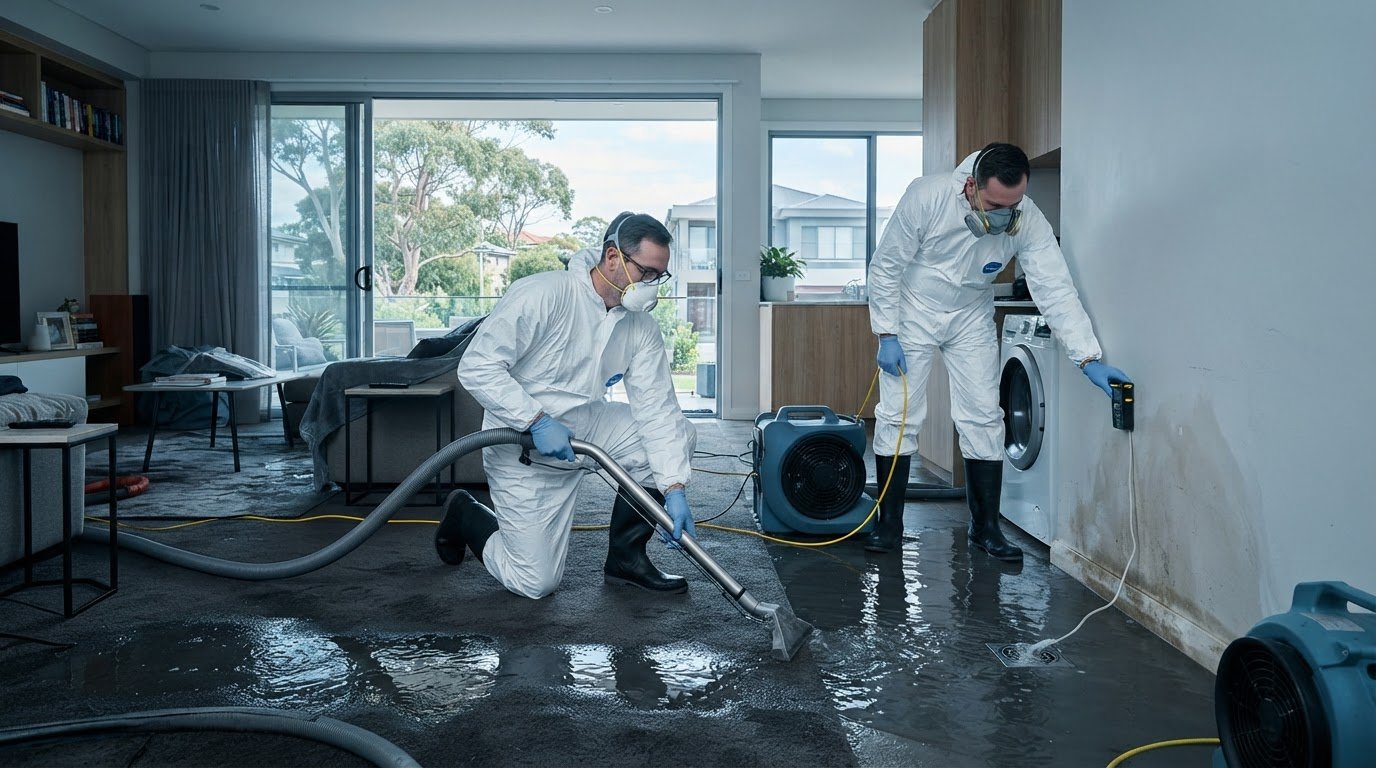
Consider specialist remediation when growth covers a larger or uncertain area, returns after cleaning, appears within building materials or follows complex moisture damage. Where major water ingress or flooding is involved, property restoration services such as Fire Industry Restoration Experts can help address underlying water damage and structural moisture drying. Before work starts, workplace managers should define the affected area, access restrictions, work timing and how staff will be informed. These steps help coordinate remediation while maintaining the workplace’s wider risk-management responsibilities.
For Sydney workplaces, ABC Mould Cleaning Solutions provides commercial mould inspection, removal and air purification. These services can support a response that considers visible contamination, airborne spores and moisture-related concerns. The appropriate scope depends on the workplace assessment and site conditions.
What steps should a workplace take after discovering mould?
A clear response turns a mould report into practical actions. Record what has been observed, protect people from possible exposure where needed, investigate moisture and contamination, then review whether controls are working. The workplace health and safety mould regulations Australia framework requires risk management under applicable jurisdictional law. There is not one universal mould-specific reporting form or process for every workplace.
Use this sequence as a starting point, adapting it to the site, risk assessment and current regulator requirements.
- Report and record: Note who reported the concern, when it was raised and what they observed.
- Control access: Restrict or manage entry if assessment indicates possible exposure or if work could disturb mould.
- Assess: Establish the likely extent, affected materials, moisture conditions and workplace activities before choosing a clean-up method.
- Act: Address active leaks or other moisture sources promptly, then select controls and remediation suited to the assessed risk.
- Review: Check the area and moisture controls after work, document outstanding concerns and decide whether further action is needed.
What should managers do immediately after mould is reported?
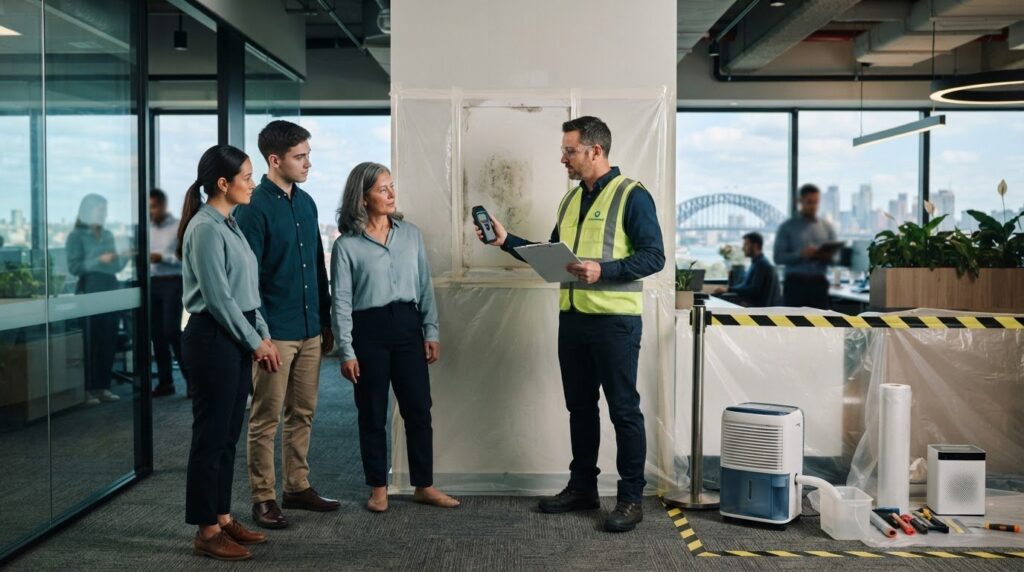
Begin with the facts. Record the location, visible extent, affected materials, signs of leaks or dampness, activities in the area and concerns reported by workers. Do not disturb mould while its extent and exposure risks are unclear. If the initial assessment indicates possible exposure or disturbance, use proportionate access controls, such as directing staff away from an affected room. Assess the moisture source and likely extent before selecting a cleaning approach.
Tell affected workers what is known, which controls are in place and how to report changes. Take reported symptoms seriously, protect personal medical information and direct health questions to an appropriate health professional. Whether symptoms or an incident trigger a formal notification duty depends on the applicable law and circumstances. Check the relevant jurisdiction’s requirements rather than assuming every mould report is notifiable.
Retain useful records:
- Report date, location, observations and photographs where appropriate.
- Assessment findings, moisture-source investigation and decisions made.
- Access restrictions, control measures, responsible people and work completed.
- Worker communications, follow-up concerns, review date and review decision.
How should a workplace verify controls and resume normal use?
Before returning an area to normal use, review whether the moisture source has been corrected and the affected materials have been addressed. Record residual concerns, follow-up work and how workers were informed. Visual appearance alone cannot prove that an area is free of mould or airborne spores. Base the decision on the assessment, completed work and effectiveness of controls, rather than appearance alone.
When an area needs professional assessment or remediation, ABC Mould Cleaning Solutions provides commercial mould inspection and remediation in Sydney, with air purification available as part of a coordinated response. Arrange a commercial mould inspection to plan the next steps for your workplace.
How can specialist mould services support a compliant Sydney workplace response?
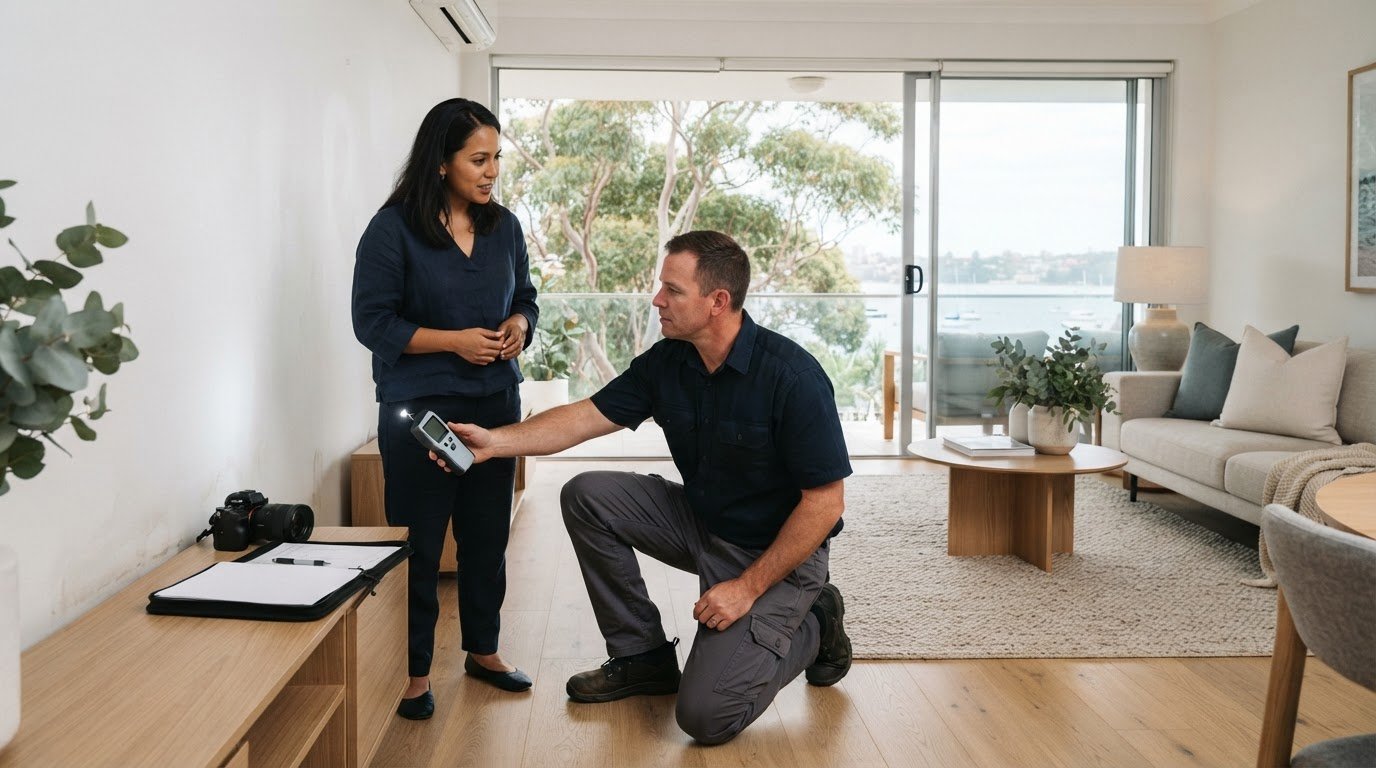
Specialist support can help a workplace understand the contamination before deciding how to manage it. An inspection can assess visible growth, likely affected areas and possible moisture sources. Depending on the findings, a coordinated response may include mould removal and air purification, alongside recommendations about moisture-related concerns. This gives managers practical information to consider as part of their wider WHS risk-management process.
Professional remediation is one possible control, not a substitute for the PCBU’s legal duties. The workplace still needs to set operational controls, communicate with affected workers and review whether actions have addressed the identified risk. Specialist input can help clarify the scope of work, particularly where contamination is concealed, recurring or associated with water damage.
What can a commercial mould inspection and remediation address?
In a commercial property, inspection can help establish where mould is visible, how far the affected area may extend and whether there are signs of moisture that need attention. Removal and air purification may then form part of a response tailored to the site. ABC Mould Cleaning Solutions uses the Goldmorr System, which includes a biodegradable fogging process intended to address surface mould and airborne spores. This describes the process, not a guarantee of a particular result or suitability for every site.
Coordinating inspection and remediation can help workplace managers plan around the affected space and nearby work. For further background on professional mould removal in Sydney, consider how removal fits alongside moisture management and workplace controls.
What information helps plan a workplace mould response?
Prepare a concise site summary before arranging support. Include the affected location, approximate extent, visible materials, access conditions and any known history of leaks, flooding or other water damage. Note whether workers occupy nearby spaces, what activities happen there and whether planned work could disturb affected materials. These details help define the assessment and coordinate access, scheduling and communication.
Share relevant observations and existing controls, but do not treat photographs or a visual check as a complete assessment of concealed contamination. Keep the workplace’s risk assessment and responsibilities in view when defining the scope. ABC’s commercial mould inspection, mould removal and air purification can support Sydney-area workplaces responding to mould concerns.
Bring together the site details, water-damage history and access requirements, then request support through ABC’s commercial mould service page. A considered assessment can help managers plan a proportionate response and decide how specialist work fits the site’s controls. The workplace remains responsible for WHS decisions, including reviewing the response after work is complete.
Make your next workplace response more prepared
A mould report can reveal where everyday maintenance and reporting processes need to be clearer. Give staff a straightforward way to report dampness early, assign someone to track follow-up actions and revisit controls if the affected area or workplace use changes. These habits help your team respond more consistently when moisture or mould is noticed.
Keep your approach grounded in the workplace health and safety mould regulations Australia requirements that apply to your location. When the extent or source of contamination is unclear, specialist input can inform the next practical steps. ABC Mould Cleaning Solutions supports commercial workplaces across Sydney and surrounding regions with inspection and mould removal, with air purification and scrubbing available as part of a broader response.
Arrange a commercial mould inspection and discuss a practical workplace response. A clear plan helps your workplace move forward with informed next steps.
Frequently Asked Questions
Is there a specific mould regulation for workplaces in Australia?
Generally, workplace mould is managed under broader WHS duties rather than one mould-only national regulation. Australia’s model WHS framework informs state and territory laws, but local legislation, regulations and guidance can differ. A Sydney business should use current SafeWork NSW material and applicable NSW laws. Businesses elsewhere should consult the regulator for their jurisdiction. This helps ensure decisions are based on local requirements, not guidance written for another jurisdiction.
What are an employer’s responsibilities when mould is found at work?
An employer or PCBU must assess the risk and take reasonably practicable steps to protect workers and others, subject to the law in that jurisdiction. For example, a damp ceiling above a regularly occupied desk may call for different controls from mould in a locked storage space. Consult affected workers and health and safety representatives where required, then review controls if the area, work or moisture conditions change. This is general information, not legal advice.
Can employees refuse to work in a mould-affected area?
Whether an employee can cease or refuse particular work depends on the circumstances and the applicable WHS law. A mould sighting alone does not establish a universal right or procedure. Workers should promptly report the location, any disturbance and relevant concerns to a supervisor or health and safety representative, then follow workplace processes and reasonable safety directions. If they believe there is a serious risk, they should raise it urgently and follow local procedures.
Does SafeWork NSW require mould to be professionally removed?
SafeWork NSW does not set a blanket rule that every workplace mould discovery must be handled by a professional. The PCBU’s response should reflect the assessed risk, affected materials, likely extent and workplace conditions. A small, accessible area may be manageable under suitable site procedures, while concealed growth, recurring mould or water-damaged materials may need specialist assessment. Use current SafeWork NSW guidance and applicable NSW law when determining what is required.
What PPE is needed when cleaning workplace mould?
The PPE needed depends on the task and risk assessment. Cleaning a small, accessible surface presents different conditions from disturbing mouldy porous material or working in a poorly ventilated area. Regulator guidance and site procedures should inform the selection, use and disposal of protective equipment. PPE is one part of the plan. It does not replace reducing exposure, managing dust, restricting access where needed or addressing the source of dampness.
When should a workplace close or restrict access to a mould-affected area?
Restrict access when an assessment indicates that people could be exposed or normal work may disturb mould and spread dust or spores. The control might apply to one room or a defined work zone rather than the entire workplace. Consider affected activities, nearby occupants, ventilation and planned work. Review the boundary as new information emerges, and communicate clearly so staff know which areas are affected and what controls apply.
Do Australian workplaces have to report mould exposure to a WHS regulator?
A mould hazard should be managed and recorded, but a report to the regulator is not automatically required for every discovery or exposure concern. WHS notification duties generally relate to specified incidents, and whether they apply depends on the event, its consequences and the jurisdiction’s law. If a worker becomes seriously ill or another potentially notifiable event occurs, promptly check the relevant regulator’s requirements. Keep internal records even when external notification is not required.