Could the very methods used to clean your historic home be the reason its structural integrity is failing? If you own a property in the Sydney basin, you know that dampness is an architectural constant, but standard remediation often does more harm than good. You likely worry that aggressive scrubbing will crumble your porous sandstone or that invasive chemicals will violate the strict Heritage Act 1977 regulations. It’s a stressful balancing act between preserving history and protecting your health. As a dedicated heritage building mould specialist Sydney, we understand that your property requires a conservation-first approach rather than a brute-force solution.
You deserve a mould-free environment that doesn’t compromise the fabric of your asset. We’ll show you how to eliminate toxic spores using non-destructive, biodegradable methods like the Goldmorr System. This article covers the essential steps for managing long-term moisture through specialized subfloor ventilation and professional air scrubbing. You’ll learn how to achieve a compliant, healthy building while ensuring your historic materials remain untouched and intact for the next century.
Key Takeaways
- Learn why Sydney’s humid climate and porous sandstone create unique risks for historic masonry that standard cleaning cannot handle.
- Understand why hiring a qualified heritage building mould specialist Sydney is essential to avoid damaging fragile lath-and-plaster walls with abrasive scrubbing.
- Discover the Goldmorr System, a biodegradable fogging method that eliminates airborne spores in ornate cornices without using destructive chemicals.
- Master long-term preservation using a strategic moisture management plan that prioritizes professional subfloor ventilation to stop damp at its source.
- Identify the critical questions to ask contractors to ensure they comply with the Heritage Act 1977 and safeguard your property’s structural integrity.
The Unique Challenges of Mould in Sydney’s Heritage Buildings
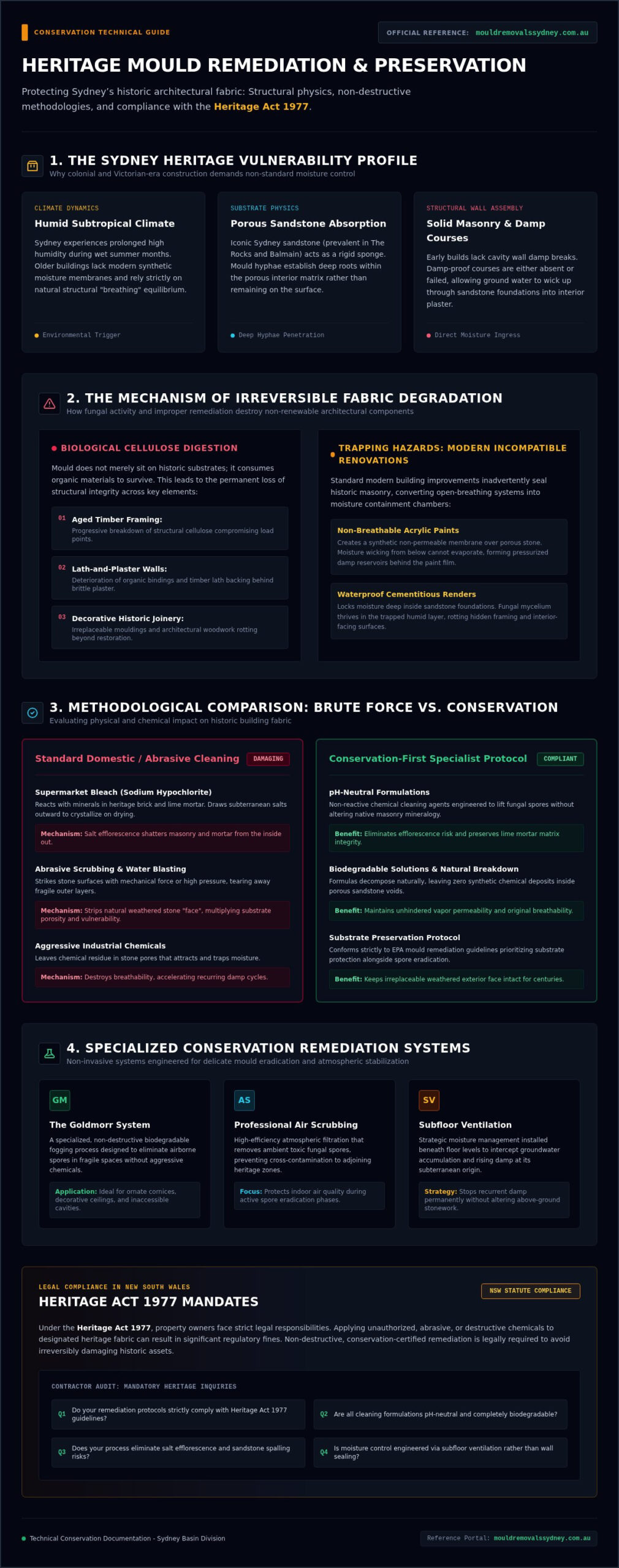
Sydney’s humid subtropical climate is a relentless adversary for historic properties. High humidity levels, particularly during the wet summer months, create an ideal breeding ground for fungal spores within older structures. Unlike modern buildings designed with moisture barriers, historic Sydney architecture often relies on its ability to “breathe.” When this balance is disrupted, mould takes hold quickly. Historic masonry, especially the iconic Sydney sandstone found in suburbs like The Rocks or Balmain, is highly porous. It acts like a rigid sponge, allowing mould hyphae to root deeply into the substrate rather than just sitting on the surface. This makes surface-level cleaning ineffective and temporary.
The threat is more than aesthetic; it’s a matter of structural survival. Mould consumes organic matter, meaning it actively breaks down the cellulose in aged timber framing, lath-and-plaster walls, and decorative joinery. In many 19th-century buildings, the original damp-proof courses have either completely failed or were never installed. This leads to persistent moisture ingress that traditional cleaning can’t fix. Left unchecked, this fungal activity results in the permanent loss of “historic fabric,” where the original materials of the building degrade beyond the point of restoration.
Why Older Sydney Architecture Traps Moisture
Early colonial and Victorian-era builds typically lack the cavity walls found in modern construction. These solid masonry walls allow moisture to transfer directly from the exterior to the interior. Rising damp is a frequent consequence, where groundwater wicks up through sandstone foundations and saturates interior plaster. Modern renovations often exacerbate these issues. The use of non-breathable acrylic paints or waterproof renders seals the walls. This traps moisture inside the historic masonry, creating a pressurized environment where mould flourishes behind the paint film. Breaking this cycle requires a deep understanding of traditional building physics.
The Legal and Conservation Stakes
Owning a heritage asset in New South Wales comes with specific legal responsibilities under the Heritage Act 1977. You cannot simply apply aggressive industrial chemicals or abrasive scrubbing techniques to these surfaces. Invasive removal methods often cause salt efflorescence, a process where salts are drawn to the surface of the brickwork, causing it to crumble and “spall.” This damage is irreversible and can lead to significant regulatory fines. To protect your investment and remain compliant, you must engage a heritage building mould specialist Sydney property owners can rely on for non-destructive techniques. We ensure that remediation efforts respect the conservation requirements of the building while effectively eliminating the health risks associated with toxic spores.
Specialized Remediation: Protecting Historic Materials
Heritage mould remediation is the technical process of removing fungal growth using non-destructive, pH-neutral, and conservation-approved methods. It differs from standard cleaning because it prioritizes the chemical and physical stability of the building’s historic fabric. Many property owners mistakenly reach for supermarket bleach, but this is a critical error for historic assets. Sodium hypochlorite reacts with the minerals in old brick and mortar to cause salt efflorescence. This process draws salts to the surface, where they crystallize and physically shatter the masonry from the inside out. Professional EPA mould remediation guidelines emphasize that removing the moisture source and protecting the substrate is just as important as killing the spores. Engaging a heritage building mould specialist Sydney is the only way to ensure these delicate chemical balances remain undisturbed.
Masonry and Sandstone Sensitivity
Aggressive scrubbing or high-pressure water blasting strips away the “face” of historic sandstone. This protective weathered layer is irreplaceable. Once it’s gone, the stone becomes even more porous and vulnerable to future infestations. We utilize pH-neutral cleaning agents that lift spores without altering the stone’s chemistry or causing surface erosion. Biodegradable solutions are essential for porous heritage surfaces because they break down naturally without leaving behind harmful chemical residues that trap moisture within the stone’s pores. This approach maintains the “breathability” that Sydney sandstone requires to remain structurally sound over centuries.
Timber and Lath-and-Plaster Care
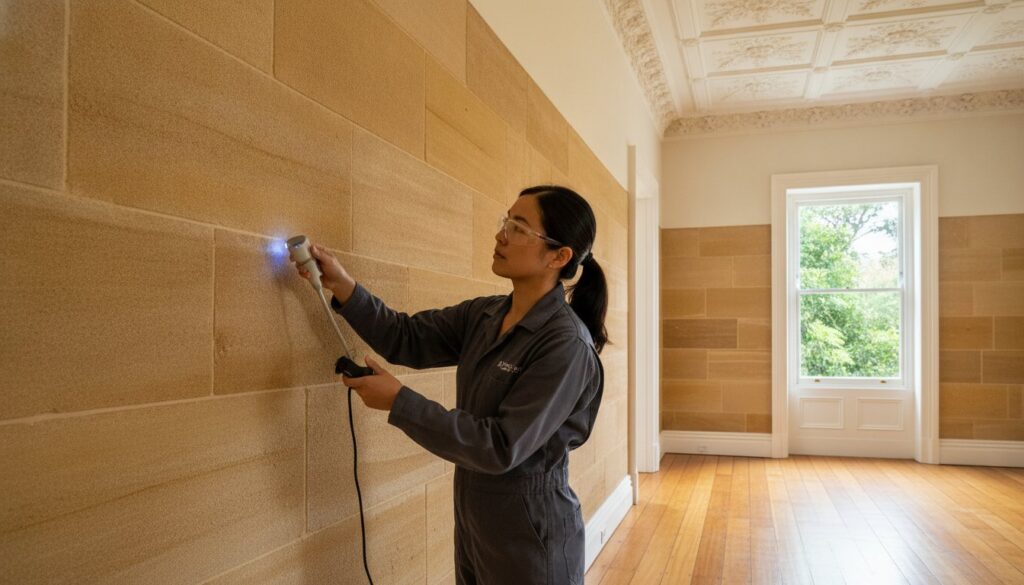
Treating structural beams and floorboards requires a specialized touch to avoid warping or secondary rot. In many grand Sydney homes, the real threat is hidden mould growing behind lath-and-plaster walls. To understand the biology of these infestations, it helps to know what is mould and how it feeds on the organic binders in old plaster. Our approach focuses on safe spore elimination for delicate hand-carved wood features and ornate cornices. We manage airborne spores in high-ceilinged rooms using industrial-grade air purification and scrubbing. This ensures that while we treat the visible surfaces, we also remove the microscopic threats floating in the air. We use the Goldmorr System’s biodegradable fogging to reach into the smallest crevices of ornate timber without saturating the wood or causing it to swell.
If you’ve noticed a persistent musty smell in your historic property, it’s time to act before the damage becomes irreversible. You can request a specialist heritage inspection today to receive a detailed assessment of your building’s health.
The Goldmorr System: The Heritage Gold Standard
Protecting a historic asset requires a remediation strategy that is as sophisticated as the architecture itself. Traditional methods often rely on aggressive physical contact, which we’ve already established can lead to the crumbling of aged Sydney sandstone and timber. This is why we utilize the Goldmorr System. As a leading heritage building mould specialist Sydney, we’ve found this professional-grade, biodegradable approach to be the only method that effectively eliminates mould without risking the structural integrity of 19th-century materials. It provides a systematic, evidence-based solution that prioritizes the safety of both the building’s occupants and its historic fabric.
One of the most significant advantages for owners of grand historic homes is the minimal disruption involved. Because the process is fast and non-invasive, you don’t have to worry about long-term displacement or the mess associated with traditional “rip and replace” tactics. The biodegradable nature of the product ensures that no toxic residues are left behind to linger in porous materials, making it the safest choice for families and staff living or working in these spaces; once your home is restored, you may also want to discover First4Frames Gallery for expert guidance on showcasing your art safely within these historic walls.
The true power of this methodology lies in its two-pronged approach. While we treat visible infestations on walls with a non-bleach, pH-neutral solution, the airborne fogging stage addresses the hidden threat. Mould spores are microscopic and easily travel into ornate cornices, ceiling roses, and inaccessible roof voids. Traditional cleaning simply cannot reach these areas. Our fogging process creates a fine mist that penetrates the deepest cracks and crevices of aged building materials. The science focuses on neutralizing the spores at a molecular level rather than just “cleaning” the surface. This ensures that the colony is actually destroyed, preventing the rapid regrowth common with retail-grade cleaners.
Evidence-Based Results for Peace of Mind
We don’t expect you to take our word for it. Every heritage project should conclude with post-remediation air quality testing to verify that spore counts have returned to safe, natural levels. This visual and scientific proof is what differentiates professional mould removal from DIY attempts. Hardware store “mould killers” often contain high concentrations of water and bleach, which only feed the mould roots in porous sandstone and lead to salt damage. By using a specialized system, you receive a certificate of clearance that confirms your heritage asset is healthy and compliant with Australian standards. It’s a pragmatic, results-driven way to restore safety and well-being to your property.
Beyond Removal: Long-Term Preservation Strategies
Removal is only the first step in a professional remediation plan. If the environmental conditions that allowed the spores to flourish remain unchanged, the infestation will return within weeks. A qualified heritage building mould specialist Sydney focuses on the “why” behind the growth. This involves a systematic 5-step strategy for historic moisture management:
- Comprehensive forensic moisture mapping to locate hidden leaks.
- Non-destructive remediation using the Goldmorr System to clear existing spores.
- Structural repair of failed damp-proof courses or blocked drainage.
- Mechanical or passive ventilation upgrades to manage humidity.
- Long-term atmospheric monitoring to ensure the building remains “dry.”
Historic Sydney buildings often suffer from rising damp because original slate or bitumen damp-proof courses have cracked or perished over the last century. Treating this requires specialized knowledge of how Sydney sandstone interacts with groundwater. We focus on restoring the building’s natural ability to shed moisture rather than applying temporary “band-aid” fixes that can trap dampness deeper within the walls.
Subfloor Ventilation Systems
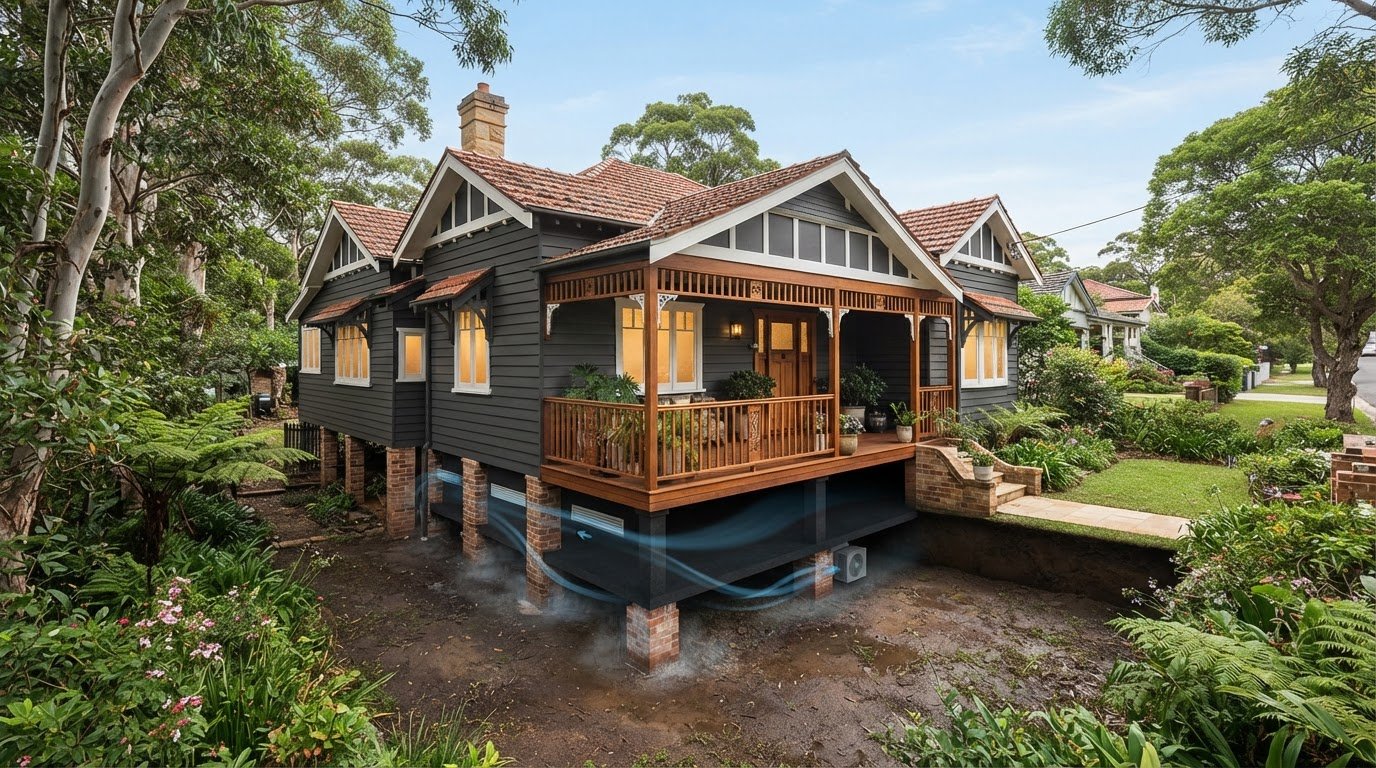
Stagnant air under floorboards is a primary driver of fungal growth in Federation and Victorian homes. When air cannot circulate, the humidity in the subfloor void spikes, leading to “cupping” floorboards and rotting joists. We install discreet, heritage-sensitive ventilation units that provide the necessary air changes per hour without ruining the building’s aesthetic. These systems are balanced to ensure that while moisture is extracted, the structural movement of the building isn’t compromised by rapid drying. It’s a pragmatic, no-nonsense solution to a chronic architectural problem common in the Sydney basin.
Managing Rising Damp and Condensation
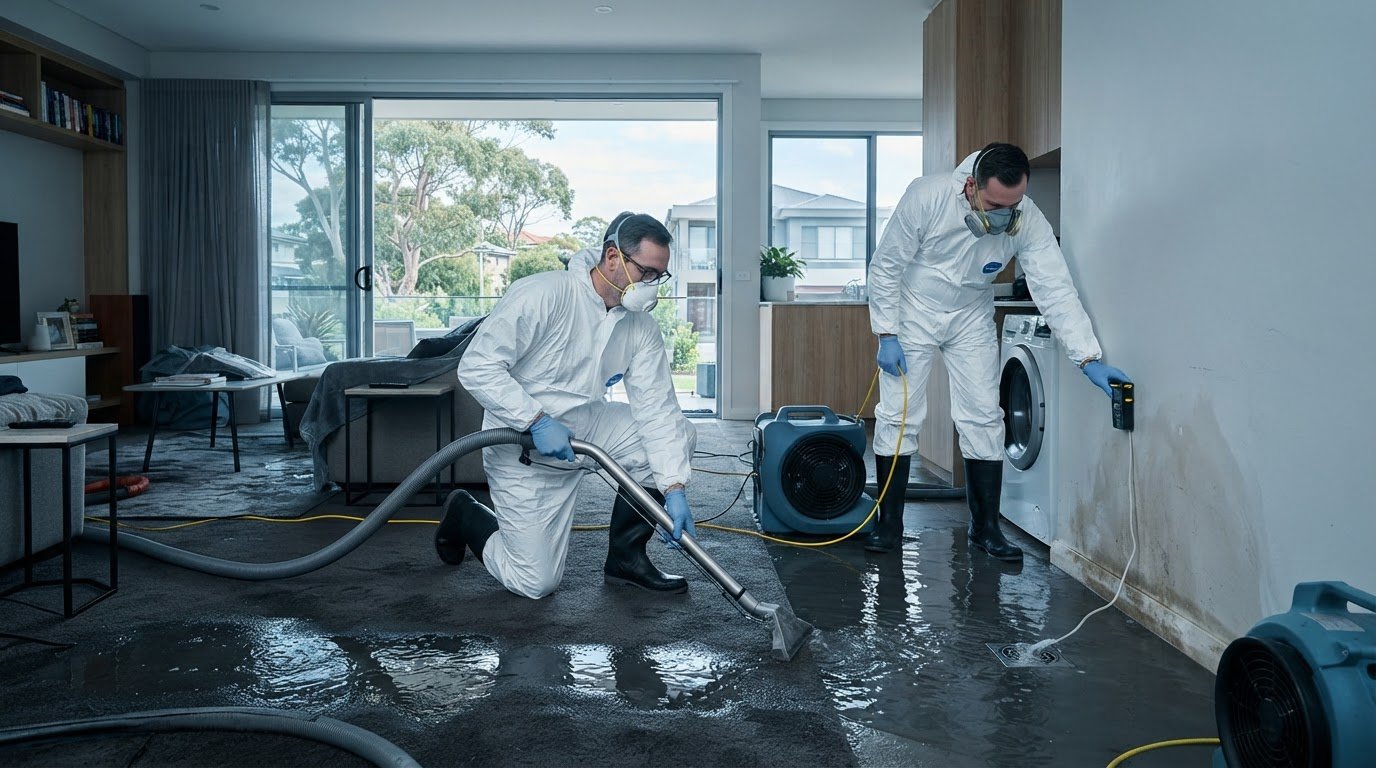
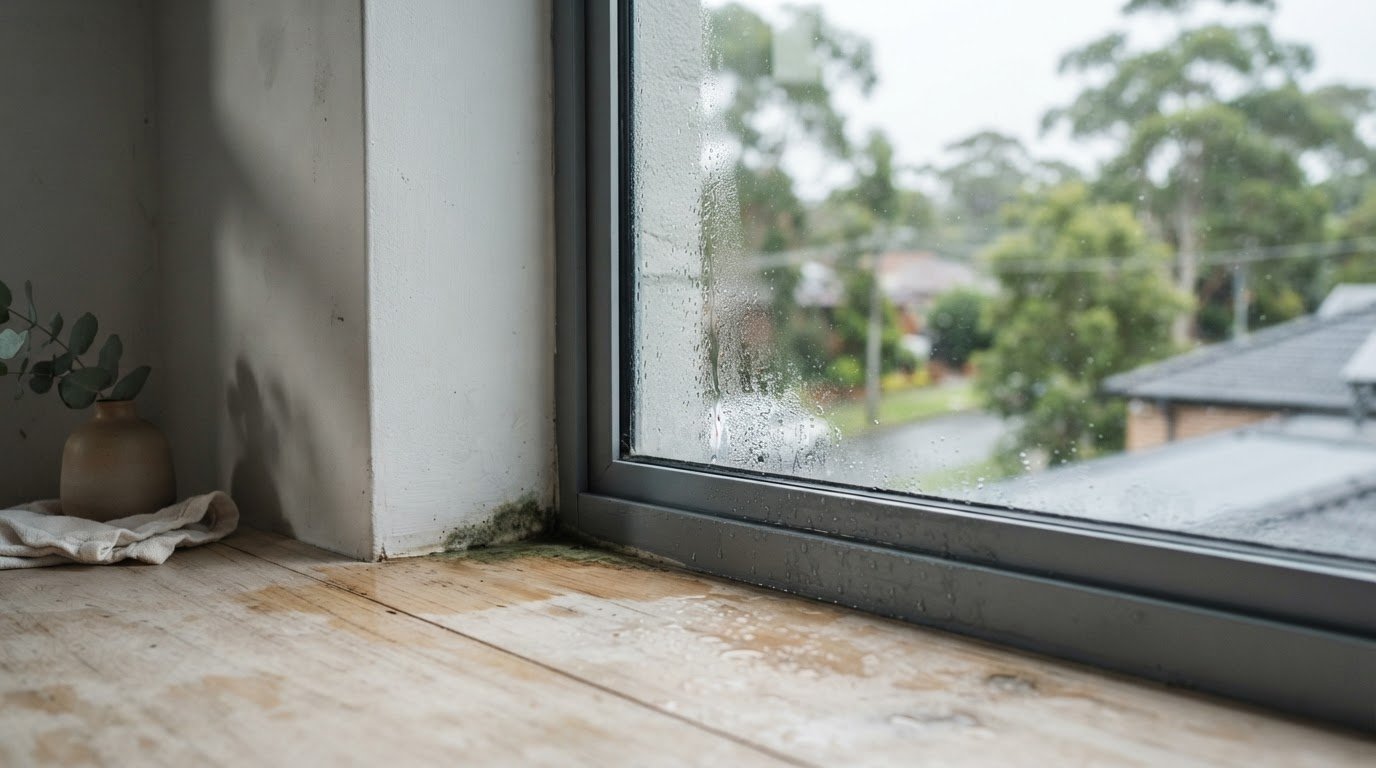
Property owners often confuse surface condensation with structural rising damp. Condensation is an internal issue often caused by modern lifestyle factors and poor airflow, while rising damp is a capillary failure where water wicks up through the foundations. Sealing old walls with modern membranes is a dangerous mistake. It traps moisture inside the masonry and forces it higher up the wall, causing irreparable damage to the historic fabric. If your property has recently suffered from a pipe burst or heavy storm ingress, you should consult our water damage repair guide to prevent a secondary mould outbreak.
Stop the cycle of recurring damp before it causes permanent structural loss. Book a subfloor ventilation assessment today to secure your building’s future.
Choosing Your Heritage Mould Specialist in Sydney
Selecting a partner to work on your historic asset is a decision that impacts both the building’s longevity and your financial security. You aren’t just looking for a cleaner; you need a heritage building mould specialist Sydney property owners trust to navigate the complexities of 19th-century construction. Local expertise is non-negotiable. A specialist must understand how the Sydney basin’s unique soil composition and humidity levels affect sandstone foundations. They must also be intimately familiar with the Heritage Act 1977 to ensure all remediation work remains compliant with local council conservation rules. Using an unqualified contractor risks permanent damage to fragile surfaces that no amount of money can later fix.
Before you allow a contractor to touch your walls, ask these critical questions:
- Do you use pH-neutral, biodegradable products safe for porous sandstone?
- Are you certified in the Goldmorr System fogging methodology?
- How do you ensure airborne spores are eliminated without abrasive scrubbing?
- Can you provide a post-remediation clearance certificate?
ABC Mould Cleaning Solutions provides a professional, affordable, and heritage-aware service that bridges the gap between modern science and historic preservation. We don’t use aggressive retail chemicals that cause salt efflorescence. Instead, we rely on our proven inspection-to-prevention workflow to address the root cause of dampness and protect your investment.
What to Look for in a Specialist
Experience with the Goldmorr System is a primary indicator of a qualified professional. This methodology is specifically designed to be non-invasive, making it the safest choice for aged timber and lath-and-plaster. A true specialist also understands the importance of subfloor ventilation. They should offer end-to-end solutions that include mechanical ventilation installation to prevent the mould from ever returning. Our team is committed to using non-toxic products that protect both the building’s occupants and its delicate historic fabric while meeting strict Sydney heritage requirements.
Start Your Restoration Journey Today
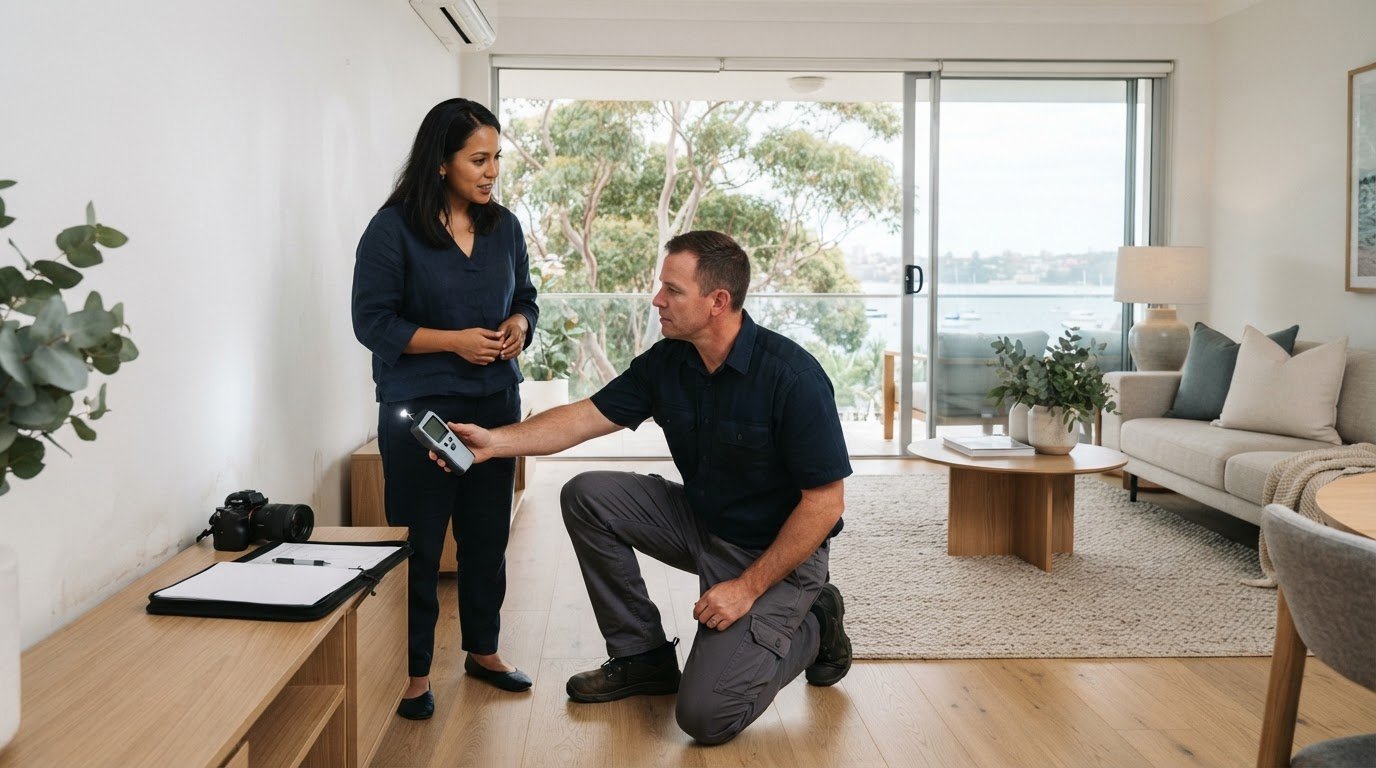
The path to a healthy, compliant building begins with a comprehensive heritage mould inspection. We use advanced moisture mapping to identify exactly where the dampness is hiding behind your historic finishes. Once the assessment is complete, you’ll receive a tailored remediation and prevention plan designed for your specific property type. Don’t wait for the damage to escalate or for regulatory fines to mount. Action today prevents structural loss tomorrow.
Contact the experts at ABC Mould Cleaning Solutions for a safe, fast, and guaranteed solution. We offer a streamlined inquiry process where you can submit digital media of the affected areas for a rapid assessment. Let’s restore your property to its former glory without the stress of invasive cleaning.
Secure the Future of Your Heritage Asset
Your property is a significant piece of Sydney’s history; don’t let fungal growth compromise its structural integrity. We’ve explored how the Goldmorr System provides a non-invasive solution that targets spores without damaging porous sandstone or fragile timber. By prioritizing moisture management through professional subfloor ventilation, you can stop the cycle of dampness for good. Our team ensures every remediation project remains in strict alignment with the Heritage Act 1977, giving you total peace of mind regarding regulatory compliance.
As a leading heritage building mould specialist Sydney, we offer the expertise required to handle these sensitive environments. Whether you’re dealing with chronic rising damp or require a 24/7 emergency response for sudden water damage, we’re ready to assist. It’s time to transition from a state of concern to a state of resolution with a plan tailored to your building’s unique physics. Take the first step toward a healthy, mould-free home today.
Protect your historic property-Book a Specialist Heritage Mould Inspection today
Frequently Asked Questions
Is professional mould removal safe for 100-year-old sandstone walls?
Professional mould removal is entirely safe for century-old sandstone when you use pH-neutral, non-abrasive methods. Traditional scrubbing or high-pressure water blasting can strip the protective face of the stone, causing it to crumble. We utilize the Goldmorr System, which relies on a biodegradable process to lift spores without altering the stone’s chemical balance. This ensures the structural integrity of your heritage masonry remains intact while effectively clearing deep-rooted fungal growth.
Do heritage buildings require a different type of mould inspection?
Heritage buildings require a specialized inspection that prioritizes forensic moisture mapping and structural analysis. As a heritage building mould specialist Sydney, our inspectors focus on the “breathability” of the building’s fabric. A standard assessment often misses the root causes unique to older Sydney basin architecture, such as failed damp-proof courses or stagnant subfloor air. We identify whether the moisture is originating from rising damp in sandstone foundations or internal condensation.
Will the Goldmorr System fogging process damage my antique furniture or historic wallpaper?
The Goldmorr System fogging process is specifically designed to be safe for delicate historic interiors, including antique furniture and original wallpaper. It creates a fine, biodegradable mist that neutralizes airborne spores without saturating the surfaces it touches. Because the particles are microscopic, they don’t cause the moisture damage or warping associated with liquid sprays. This makes it the preferred choice for grand historic residences where preserving the internal aesthetic is a primary concern.
How long does the remediation process take for a large heritage property?
Most heritage remediation projects are completed within one to three business days, depending on the property’s size and the infestation’s severity. Large Victorian estates or multi-story commercial buildings might require additional time if we are also installing subfloor ventilation systems. Because our fogging method is fast-acting and non-invasive, residents typically don’t need to vacate for long periods. We focus on achieving a rapid clearance while maintaining meticulous conservation standards.
Can I use clove oil or vinegar to treat mould on heritage timber?
You should avoid using clove oil or vinegar on heritage timber because these substances can cause permanent staining and surface degradation. Clove oil is an essential oil that can leave greasy residues on aged wood; vinegar’s acidity may react with historic finishes. These DIY methods often only treat the surface, leaving the roots of the mould to continue feeding on the timber’s organic fibers. Professional remediation is necessary to ensure the wood remains dry and stable.
Does Sydney Council require a permit for mould removal in a heritage-listed building?
Minor maintenance work, including non-destructive mould removal, usually doesn’t require a formal permit from the Sydney Council under the Heritage Act 1977. However, you must ensure the cleaning methods don’t alter the “historic fabric” of the building. Using a qualified heritage building mould specialist Sydney ensures that your remediation plan follows these strict conservation guidelines. It’s always a safe practice to verify specific local council requirements for your suburb before starting significant structural moisture repairs.
Why does mould keep returning to the subfloor of my Federation home?
Mould returns to the subfloor of Federation homes because stagnant, humid air creates a persistent breeding ground under the floorboards. Older Sydney properties often have blocked air bricks or inadequate cross-ventilation, which traps moisture rising from the soil. Without a mechanical subfloor ventilation system, the humidity levels will remain high enough for spores to regrow. Addressing the environmental root cause is the only way to break the cycle of recurring fungal infestations in historic foundations.
Is the mould removal process safe for residents with asthma or allergies?
Our remediation process is highly beneficial for residents with asthma or allergies because it removes the triggers that cause respiratory distress. We use biodegradable, non-toxic solutions that don’t off-gas harmful chemicals into your living space. By combining the Goldmorr System with professional air scrubbing, we eliminate both the visible mould and the microscopic airborne spores. This results in a significant improvement in indoor air quality, making the environment safer for all occupants.