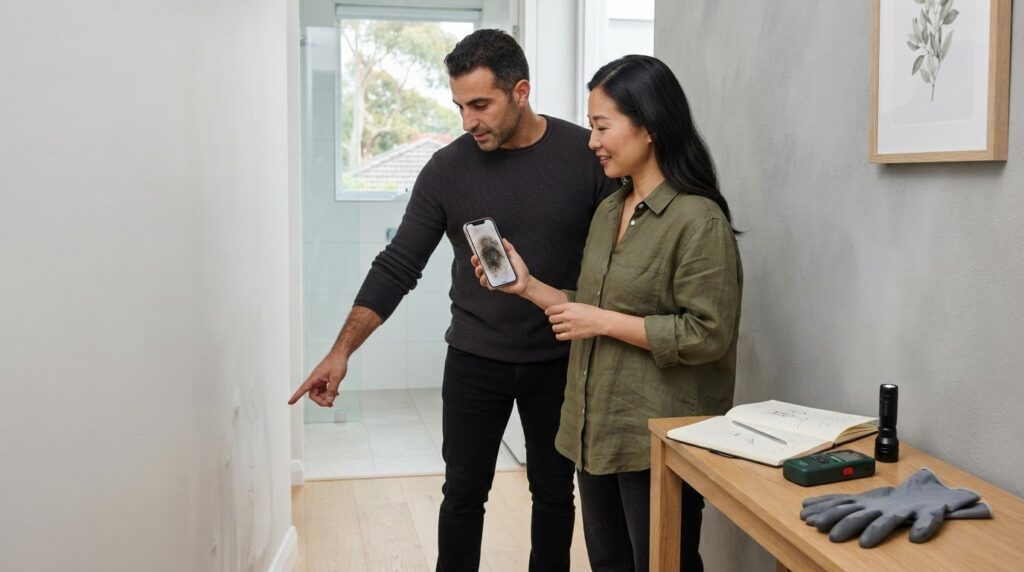
What if the best way to convince your partner isn’t to argue more forcefully, but to make the concern easier to see? If you’re wondering how to convince my partner mould is a serious problem, it can be frustrating when visible growth or a musty smell is dismissed as cosmetic. But escalating the conversation or making alarming health claims may only create defensiveness.
Your concern deserves to be heard, and you don’t need to exaggerate to explain why mould needs attention. A photo, a note of where and when it appears, and observations about dampness or leaks can help you both focus on what’s happening rather than who’s right. Mould can return if the moisture behind it isn’t addressed, so understanding the likely source matters too.
This article will help you start a calm conversation, share credible evidence and agree on proportionate next steps. You’ll learn how to document what you’ve found, discuss inspection or professional help without making it a confrontation, and recognise when to seek qualified local advice. The aim is a practical shared plan, not panic or blame.
Key Takeaways
- Different reactions to mould don’t have to become an argument. Focus the discussion on what you can both observe, without treating visible growth as proof of a specific health outcome.
- To explain why you’re concerned, describe where mould appears, whether it returns, and any signs of dampness or recent water damage.
- Learn how to convince my partner mould is a serious problem by replacing blame and alarm with calm, specific wording that invites a shared decision.
- Agree on a practical sequence: document the issue, consider possible moisture sources, set boundaries around disturbing the area, then decide whether to seek advice.
- If you disagree about the extent or likely cause, a professional mould inspection may help clarify the visible growth, possible moisture sources and appropriate next steps.
Why visible mould deserves a calm, serious conversation
One partner may see a spreading patch or smell a musty odour and want answers. The other may see a small mark that can wait. Both reactions are understandable: noticing a possible problem doesn’t establish its cause or health impact, but dismissing it without checking can leave a moisture issue unexplored.
Indoor mould is growth that can develop when moisture and suitable conditions are present. Its presence is a reason to pay attention to the affected area and consider what’s keeping it damp. It isn’t, by itself, a diagnosis of illness or proof that everyone in the home faces the same level of risk.
What can visible mould tell you, and what can’t it prove?
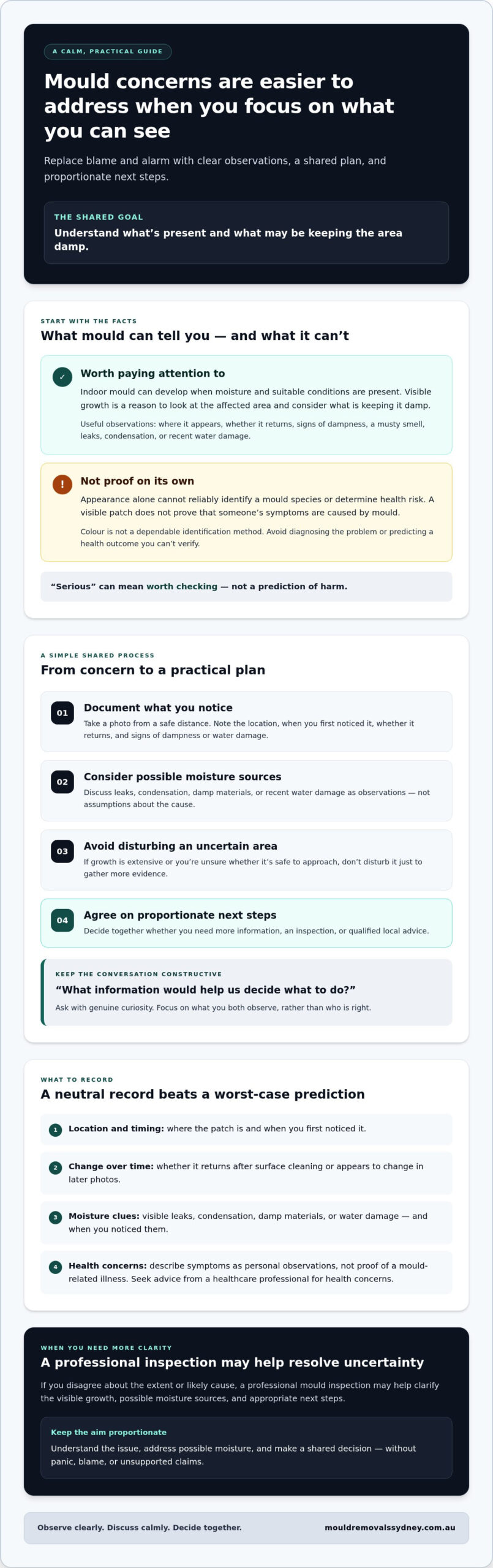
Start with what you can observe. Note where the patch is, whether it returns, whether the surface feels damp, and whether there’s a musty smell or a history of water damage. These details can help you discuss the issue without guessing at its cause.
Appearance alone can’t reliably identify a mould species or determine health risk. Even a dark patch can’t confirm that it’s Stachybotrys chartarum (black mold); colour isn’t a dependable identification method. Likewise, a visible patch doesn’t prove that someone’s symptoms are caused by mould. Avoid diagnosing the problem or making claims about exposure that you can’t verify.
Keep the conversation proportionate. A small, localised patch and extensive recurring growth aren’t necessarily the same situation, but either can prompt a sensible check of the moisture source. The aim is to understand what’s present, not to label it as harmless or dangerous before you have enough information.
Why your partner may not see the same level of concern
Different risk tolerance or past experience can shape how each of you interprets the same patch. One person may have dealt with recurring damp before; the other may see a minor mark and worry that inspection will mean cost, disruption, or blame. Ask with genuine curiosity: “What information would help us decide what to do?”
That question shifts the focus from winning an argument to agreeing on what would make the situation clearer. You might both want to know whether the patch is growing, whether the area is damp, or whether it returns after cleaning. Separate those questions from assumptions about mould type or health effects.
If you’re working out how to convince my partner mould is a serious problem, treat “serious” as “worth checking,” not as a prediction of harm. Calm, specific observations give both of you a better starting point for deciding what to do next.
How to explain mould concerns with facts instead of fear
A calm, specific account is more persuasive than a worst-case prediction. Focus on what you’ve seen, where it is and whether anything has changed. The goal isn’t to prove that mould has harmed someone; it’s to agree that visible growth or dampness deserves a closer look and to understand what information would help you both decide what to do.
A visible sign can point to a mould or moisture issue, but it can’t confirm the cause, species or health impact on its own.
Build a simple record of what you have observed
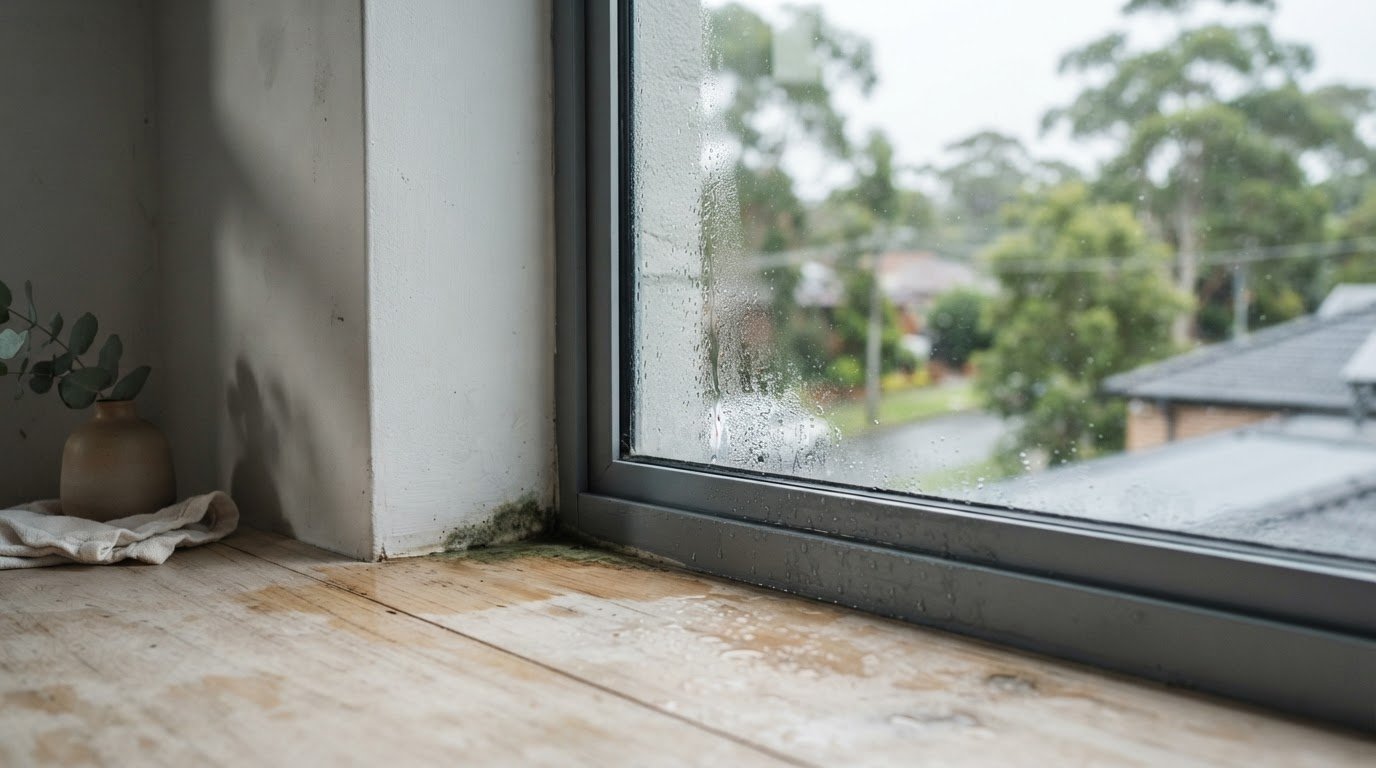
Make a brief record together, using neutral descriptions rather than conclusions. Note when you first noticed the patch, its location, whether it returns after surface cleaning and any signs of dampness. Include relevant context, such as condensation or recent water damage, without assuming you know the source.
- Take a photo from a safe distance and, if useful, compare later photos to see whether the area appears to change.
- Record visible leaks, condensation or damp materials, along with when you noticed them.
- If someone has symptoms, describe them as personal observations, not proof of a mould-related illness. For health concerns, seek advice from a healthcare professional.
This record gives you both something concrete to discuss. If the area is extensive or you’re unsure whether it’s safe to approach, don’t disturb it just to gather more evidence. Keep observations separate from assumptions about exposure or what may be causing symptoms.
Use measured language about health and the home
Avoid claims such as “that colour means it’s toxic” or “everyone here will get sick.” Colour can’t establish the mould type, and people may respond differently depending on their individual circumstances. You can still explain that you want to investigate moisture and mould without predicting a particular health outcome.
For general health information in Australia, consult healthdirect or your state or territory health department. These sources can provide broader health guidance, but they can’t diagnose the cause of symptoms in your household or assess the conditions in your home. If symptoms are concerning, speak with a healthcare professional rather than trying to identify the cause yourself.
For basic background on mould in Australian homes, you can also refer to What Is Mould? A Complete Guide for Australian Homeowners. Keep the conversation focused on practical questions: Is there ongoing dampness? Has the patch returned? What information would help us decide on a sensible next step?
If you’re unsure what an inspection might clarify, you can review mould inspection services as one option for assessing visible growth and possible moisture concerns.
What to say when your partner thinks mould is only cosmetic
If your partner sees a small mark and you see a warning sign, avoid trying to win the argument. Keep the discussion anchored to what you can both observe, then suggest a shared next step. Small or localised mould can still be a reason to check for moisture. The point isn’t to assume the worst, but to understand whether the underlying dampness is ongoing.
Try these non-blaming conversation prompts
Listen before you respond. If your partner is worried about cost, disruption or uncertainty, acknowledge that concern rather than dismissing it. Then invite them to look at the issue with you:
- “Can we look at where this keeps appearing and work out what is causing the moisture?”
- “I am not assuming the worst; I would feel better if we understood what we are seeing.”
These prompts make room for both perspectives. You can also ask what would help your partner feel comfortable deciding whether to monitor the area, investigate further or seek qualified advice.
Respond to objections without escalating the disagreement
Replace blame or certainty with a question and a practical proposal. The aim is to agree on what to check, not to prove one person right.
Instead of saying
Try saying
“You’re ignoring a serious problem.”
“Could we take a closer look together and decide what the evidence suggests?”
“It’s only a small patch.”
“Let’s note its size and check whether it spreads or comes back.”
“Wiping it off won’t fix anything.”
“Cleaning may address what’s on the surface, but can we also check whether moisture is keeping it there?”
“We need to call someone now.”
“Would an initial assessment help us understand the options before deciding what to do?”
Cleaning a surface and addressing an ongoing moisture source are different questions. If the patch returns, that’s useful information to consider together. A professional assessment may help clarify the visible issue and possible next steps, without requiring you to decide on a particular response before understanding the situation.
For general health information, consult Australian sources such as healthdirect or your state or territory health department. These can offer broad guidance, but they can’t determine the health impact of a specific patch in your home. If you’re working out how to convince my partner mould is a serious problem, keep the focus on a measured, shared decision: “Let’s base our next step on what we observe and, if needed, qualified advice.”
A practical plan couples can agree on after finding mould
Turn the discussion into a short, shared plan. You don’t need to identify the mould or settle every question before acting. Agree on what to record, what moisture clues to check without disturbing the growth, and what would prompt you to seek qualified advice.
Document and observe without turning the home into a testing project
- Record what you see. Take dated photos from a safe distance. Note the location, any musty odour or dampness, and whether the area appears to change or recur.
- Look for moisture clues. Without pulling apart materials or disturbing mould, note visible condensation, leaks or signs of recent water damage. If you suspect a leak or water damage, finding and addressing the moisture source is a priority. For relevant background, see Water Damage Repair: Your Emergency Guide for Sydney Homes.
- Set boundaries together. Agree not to scrape, dry-brush or otherwise disturb extensive or recurring growth while deciding what to do. Avoid turning the house into a testing project: a home test or visual guess shouldn’t be treated as a definitive professional assessment.
This process keeps the focus on useful observations, not repeated testing or speculation. If the growth is extensive, keeps returning, or appears after water damage, don’t disturb it to get a closer look. Seek qualified guidance if the extent or cause is unclear.
Agree on a threshold for asking a specialist
Decide together what would make you take the next step. For example, you might agree to seek an assessment if the patch recurs, covers a substantial area, or follows water damage. This turns “Do we need help?” into a practical decision based on agreed observations.
Before contacting a provider, write down the questions you both want answered: What might be contributing to the moisture? What can be assessed without disturbing the area? What options could follow? Agree who will make the enquiry, and treat an assessment as a way to clarify choices, not a commitment to a particular course of action.
If you’re comparing service options, review Sydney’s #1 Mould Removal Service: Safe, Fast & Guaranteed as a resource, and check the provider’s current scope and terms rather than assuming any outcome or guarantee. You can also explore mould inspection and removal options if professional advice would help you agree on a proportionate next step.
A simple plan can ease the pressure: document, check for moisture clues, agree on boundaries, then decide whether to seek advice. That’s a practical way to move forward together.
When a professional mould inspection can help both partners move forward
If you still disagree about the extent of the mould or what may be causing it, an inspection can give you a clearer basis for deciding what to do. It can help assess visible growth, consider possible moisture sources and outline practical next steps. It won’t diagnose health concerns or guarantee a particular outcome, but it may replace speculation with useful information you can review together.
What to ask before agreeing to an inspection
Before booking, make sure you both understand what the assessment involves. Ask the provider:
- Which areas will be assessed, and how will possible moisture sources be considered?
- What findings and recommendations will be shared, and what follow-up steps might be appropriate?
- Will the inspection involve any disruption, and what should you avoid doing before the visit?
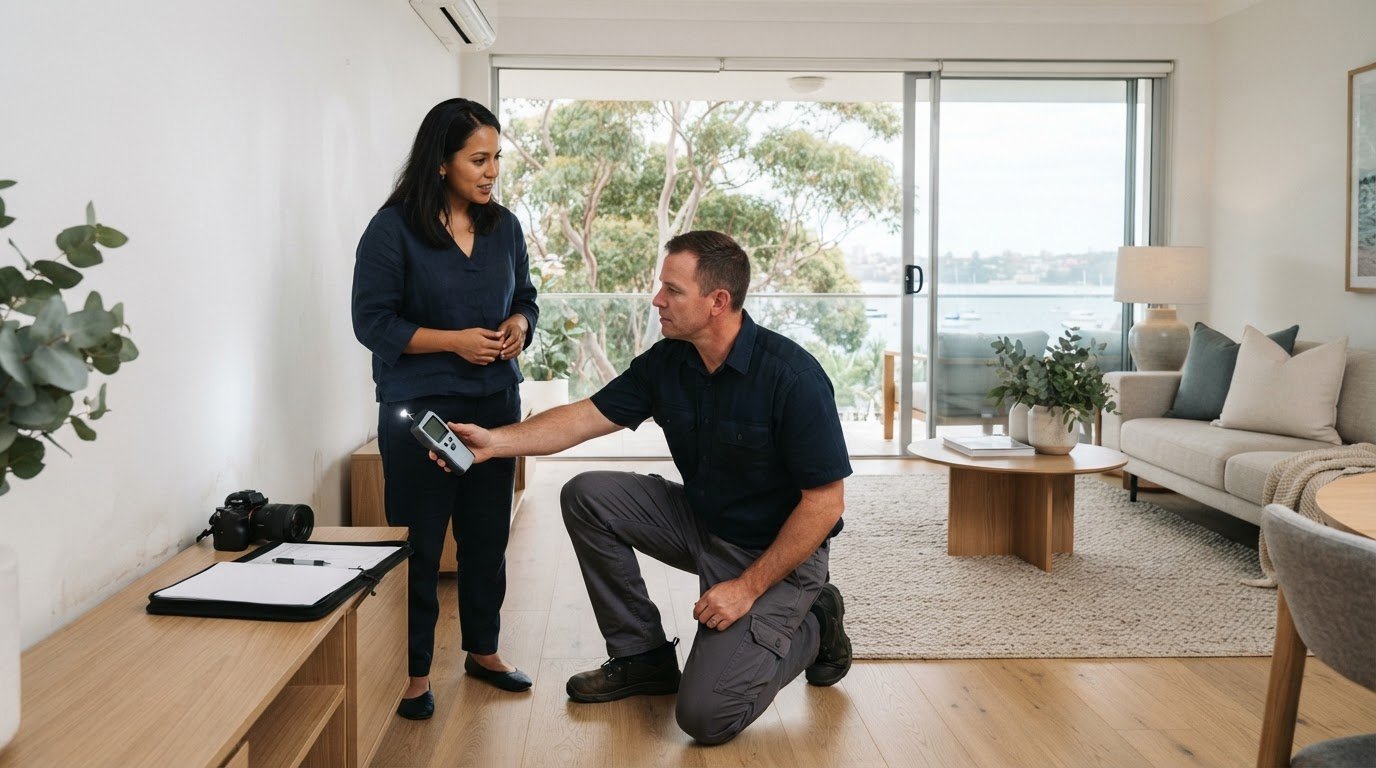
If possible, join the discussion together or review the recommendations at the same time. That way, each partner can ask questions, hear the same explanation and consider the options without feeling that a decision has already been made. You can also bring dated photos and notes about recurrence, dampness or water damage.
How Sydney homeowners can take the next step
ABC Mould Cleaning Solutions serves residential and commercial properties across Sydney and surrounding regions. Its services include mould inspection and removal, air purification and scrubbing, with recommendations that may address moisture and prevention as well as visible growth. A tailored response depends on what the assessment finds.
The business describes its Goldmorr System as a biodegradable fogging process that addresses surface mould and airborne spores. Ask the provider to explain the current process, its relevance to your situation and any preparation or follow-up involved. Don’t treat a process description as a promise of medical outcomes or permanent prevention.
Professional advice may be useful if mould keeps returning, the source or extent remains unclear, or you’re unsure what to do after water damage. The goal is not to prove one partner right. It’s to understand the situation well enough to agree on a proportionate next step.
If you and your partner would like to ask questions or discuss whether an assessment may help, discuss your mould concerns with ABC Mould Cleaning Solutions.
Take the next step together
You don’t need to frighten your partner or prove a health risk to show that mould deserves attention. Start with shared observations, keep the conversation free of blame, and agree on a proportionate plan to understand the moisture and decide what happens next.
If you’re asking how to convince my partner mould is a serious problem, focus on the value of getting clearer information together. When the cause or extent remains uncertain, professional advice can help you weigh up practical options rather than rely on guesswork.
ABC Mould Cleaning Solutions serves residential and commercial properties across Sydney and surrounding regions. Its services include mould inspection and removal, air purification, and recommendations focused on prevention. You and your partner can ask questions and discuss whether an assessment suits your situation.
Discuss your mould concerns with ABC Mould Cleaning Solutions. A calm conversation and a sensible next step can help you move forward as a team.
Frequently Asked Questions
Is mould in the home always a serious health risk?
No, seeing mould doesn’t mean everyone in the home will become ill, and the level of concern can vary with individual sensitivity and circumstances. However, visible growth or a musty smell is a reason to look into possible moisture and decide what action is appropriate. Don’t use appearance alone to assess health risk. If anyone has symptoms or health concerns, speak with a healthcare professional rather than trying to diagnose the cause yourself.
Can a small patch of mould be a sign of a bigger moisture problem?
It can be, but a small patch alone doesn’t prove there’s a larger hidden issue. Check whether it returns, whether nearby materials feel damp, and whether there are signs of condensation or water damage. These clues can help you decide whether to investigate further. If the patch keeps coming back or you can’t work out why the area is damp, consider qualified advice about the moisture source as well as the visible growth.
How can I talk to my partner about mould without causing an argument?
Begin with a specific observation and a shared question, rather than blame or a worst-case prediction. For example, say, “I’ve noticed this patch has returned. Can we work out what might be keeping the area damp?” Listen to your partner’s concerns about cost, disruption or uncertainty, then agree on a reasonable next step. If you’re wondering how to convince my partner mould is a serious problem, focus on understanding the evidence together, not winning the disagreement.
What happens if we ignore mould that keeps coming back?
If moisture remains, mould may continue to recur, even if the visible surface is cleaned. Ongoing dampness can also affect building materials, so repeated growth is a useful reason to investigate rather than simply dismiss the mark. Keep a record of where and when it reappears, and note any dampness or water damage. If you can’t identify or address the likely moisture source, seek qualified guidance on what to check next.
Can I tell what type of mould it is by its colour?
No. Colour alone can’t reliably identify a mould species or establish its health risk. Different moulds may look similar, and a dark patch isn’t proof that it’s a particular type. Avoid making decisions based on colour or trying to diagnose the growth yourself. Instead, record where it appears, whether it recurs and any signs of moisture. If identifying the extent or likely source matters to your next step, ask a qualified professional.
Should we clean mould ourselves or arrange a professional inspection?
That depends on the extent, recurrence and likely cause. A small, accessible area may seem straightforward, but cleaning the surface won’t resolve ongoing moisture. Avoid disturbing extensive or recurring growth, and seek qualified advice if you’re unsure what’s involved or how to approach it. A professional mould inspection can help assess visible growth and possible moisture sources, then inform practical next steps. Don’t rely on a home test or visual guess as a definitive assessment.
When should Sydney homeowners seek professional mould advice?
Consider professional advice if mould keeps returning, covers a substantial area, follows water damage, or its likely source is unclear. An inspection may help assess the visible growth, consider possible moisture sources and identify practical options. ABC Mould Cleaning Solutions provides mould inspection services for residential and commercial properties across Sydney and surrounding regions. You can ask what areas will be assessed, how moisture will be considered and what findings or recommendations you’ll receive before deciding how to proceed.