
A “wait and see” approach to mould in a NSW strata building isn’t just a maintenance oversight; it’s a legal ticking time bomb. You’re likely exhausted by the cycle of surface cleaning and recurring tenant complaints that never address the underlying moisture issue. To stop this cycle, you need a professional strata mould assessment report NSW that clearly identifies the root cause and defines responsibility. It’s frustrating to juggle the confusion over whether a leak is a common property defect or a lot owner’s responsibility while health risks escalate. You need more than a quick fix. You need a definitive strategy that protects the building and your professional reputation.
Securing a compliant report is the only way to bridge the gap between temporary “band-aid” solutions and permanent remediation. This 2026 guide provides you with a clear path to obtaining a legally defensible document that satisfies NSW regulations and ensures resident safety. We’ll explore the latest assessment standards, the role of specialized systems like Goldmorr biodegradable fogging, and how to create a healthy living environment that eliminates liability for good. Learn how to transform a complex environmental threat into a managed, resolved issue through professional evidence and expert action.
Key Takeaways
- Secure a professional strata mould assessment report NSW to satisfy the Strata Schemes Management Act 2015 and clearly define legal responsibility between common property and private lots.
- Utilize advanced moisture mapping and airborne spore analysis to uncover hidden leaks behind walls and compare indoor air quality against outdoor standards.
- Evaluate the benefits of remediation-integrated reports, which offer faster response times and more accurate quoting than traditional third-party hygienist assessments.
- Follow a structured compliance checklist to identify the mould source and engage a specialist who provides a clear roadmap for permanent remediation.
- Implement the Goldmorr System’s biodegradable fogging to restore safety and well-being for residents while minimizing building disruption.
What is a Strata Mould Assessment Report in NSW?
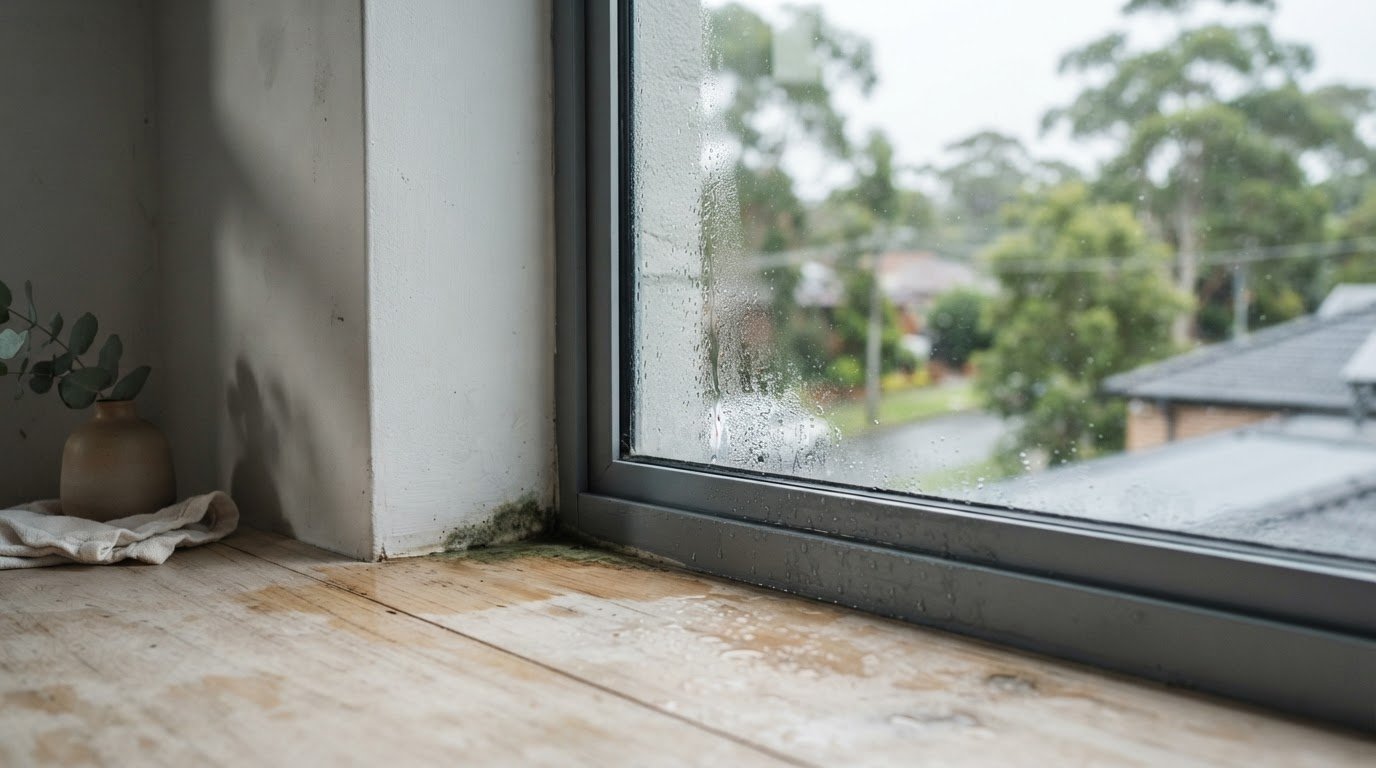
A strata mould assessment report NSW is a technical audit, not a mere visual check. It provides a scientific breakdown of mould species, the total extent of contamination, and the specific moisture source driving the growth. You can’t fix what you haven’t properly diagnosed. Many managers make the mistake of accepting a standard cleaning quote as a substitute for a professional assessment. A cleaning quote only addresses visible symptoms. A formal report identifies the root cause, which is the only way to determine if the remediation cost falls under the Owners Corporation as common property or the individual lot owner. This distinction is vital for budget management and legal clarity.
The Legal Context in NSW
Under the Strata Schemes Management Act 2015, the Owners Corporation has a strict duty of care to maintain and repair common property. This isn’t optional. If mould originates from a roof leak or a failed waterproof membrane, the building is legally responsible for the remediation. A professional report serves as critical evidence in the NSW Civil and Administrative Tribunal (NCAT) if a dispute arises. It proves you’ve taken proactive steps to ensure the property remains habitable and safe for all residents. The 2026 standards for habitability are higher than ever, and failing to provide a safe environment can lead to significant liability. A report provides the defensive documentation you need to protect your professional reputation.
When Should a Strata Manager Request a Report?
Don’t wait for visible black patches to appear on every surface. Early intervention is the only way to minimize remediation costs and resident distress. You should engage a specialist for a strata mould assessment report NSW when:
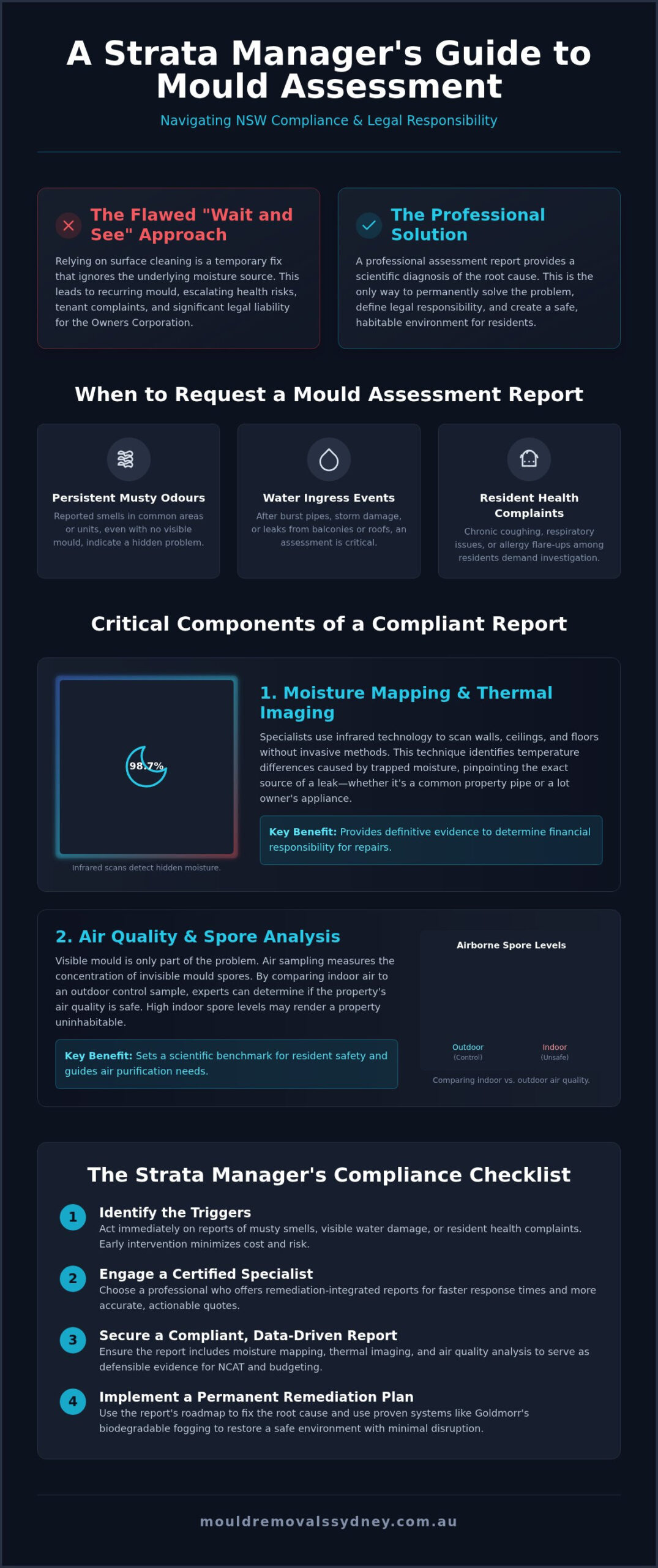
- Persistent musty odours are reported in common areas, hallways, or individual units, even if no growth is visible.
- Water ingress events occur, such as a burst pipe, heavy storm damage, or a leaking balcony membrane.
- Health complaints are raised by residents, including chronic coughing, respiratory distress, or sudden allergy flare-ups.
Acting quickly protects the building’s structural integrity and the well-being of its occupants. Our team uses a systematic approach to identify these threats before they become catastrophic. We provide the clarity you need to move from a state of concern to a state of resolution.
Critical Components of a Compliant Mould Report
A compliant strata mould assessment report NSW must go beyond a simple visual inspection. It needs to provide a scientific baseline that can withstand legal scrutiny and guide effective remediation. If your report lacks data-driven evidence, it won’t help you resolve disputes or fix the building’s underlying issues. A high-quality document integrates thermal data, species identification, and clear remediation protocols. You need a report that doesn’t just say there’s a problem, but explains exactly why it’s happening and how to stop it permanently.
Moisture Mapping and Thermal Imaging
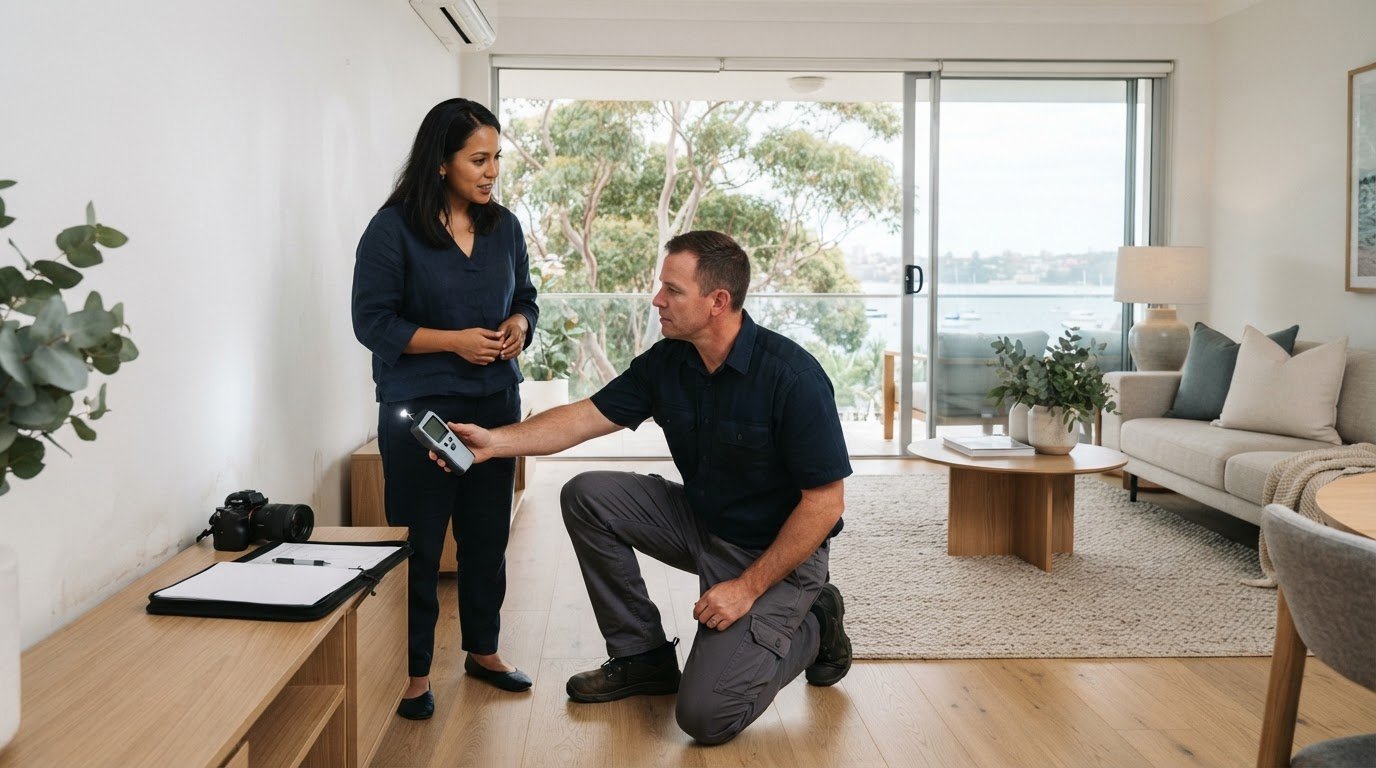
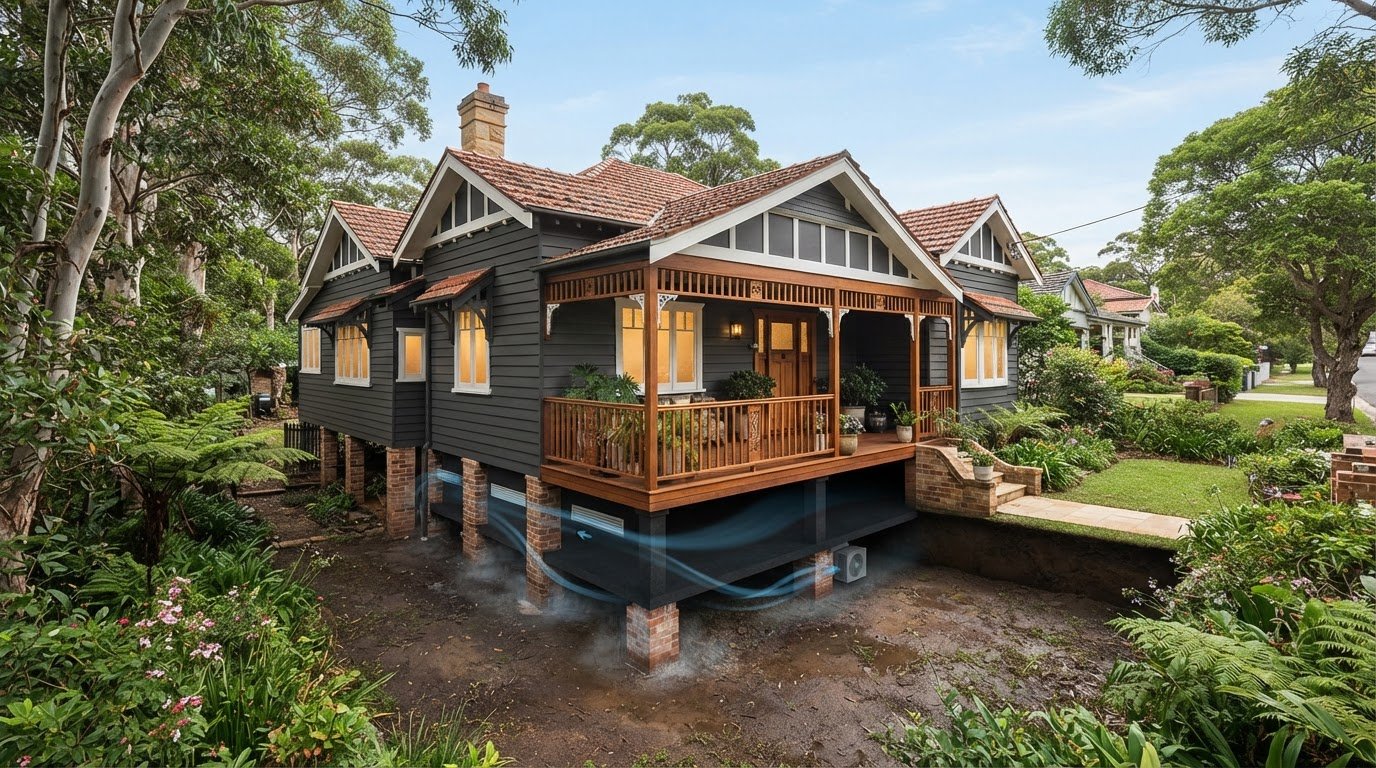
Hidden moisture is the primary driver of recurring mould. We use infrared technology to scan walls and ceilings without invasive drilling. This allows our specialists to detect temperature variances that indicate dampness trapped behind the surface. Precise moisture counts are essential for your records. They help determine if the water is coming from a common property pipe failure or a lot owner’s internal appliance. In many Sydney strata buildings, we also find that poor subfloor ventilation is the hidden culprit. Identifying these structural failures in the assessment phase prevents you from wasting money on surface-level cleaning that won’t last. Engaging a specialist for mould inspection services ensures every technical component is documented correctly, providing the Owners Corporation with a clear path forward.
Air Quality and Spore Analysis
Surface growth is only half the story. The real danger often lies in what you can’t see. Professional air quality testing distinguishes between dormant spores and active infestations. By comparing indoor samples with outdoor control samples, we can set safety benchmarks for your building. If indoor spore levels are significantly higher than the Sydney ambient air, the property may be deemed uninhabitable. This is where air purification and scrubbing become vital. These processes filter out microscopic contaminants to restore a safe environment for residents. This data is crucial for satisfying the duty of care requirements we discussed in the previous section.
A complete strata mould assessment report NSW must also identify specific mould types. Species like Stachybotrys (often called black mould) or Aspergillus carry different health risks and require specific handling protocols. Your report should conclude with actionable steps, such as:
- Specific drying protocols for structural timber and gyprock.
- Technical recommendations for subfloor ventilation upgrades.
- Detailed air scrubbing requirements to meet occupational hygiene standards.
- Post-remediation verification steps to confirm the building is safe.
Don’t settle for a vague summary. Demand a report that provides a definitive roadmap to a healthy building.
The Conflict: Independent vs. Remediation-Based Reports
Strata managers often face a difficult choice: hire an independent hygienist or engage a remediation specialist who provides their own assessment. Some industry voices argue that separation is the only way to avoid bias. However, this often creates a “consultant loop” where you pay for a report that tells you there’s a problem but offers no practical way to fix it. A strata mould assessment report NSW should be a bridge to a solution, not a bureaucratic hurdle that adds weeks to your timeline. When you choose an integrated report, you benefit from a unified workflow that prioritizes building safety over endless paperwork.
Integrated reporting offers significant advantages in both speed and accuracy. The technicians who perform the assessment are the same specialists who understand the physical constraints of strata buildings. They don’t just provide abstract data; they provide a realistic scope of work that can be executed immediately. This eliminates the common conflict where a third-party hygienist’s recommendations are physically impossible to implement or financially ruinous for the Owners Corporation.
Transparency in Assessment
Transparency is the foundation of a dependable report. We maintain this by relying exclusively on objective data, such as calibrated moisture levels and lab-certified spore counts. This removes subjective opinion from the process. Our reports are designed to stand up to intense scrutiny from insurance adjusters and legal representatives who require hard evidence before approving claims. Evidence-based reporting provides the Owners Corporation with a definitive, unshakeable record of the building’s environmental health. By using specialized technology like thermal imaging, we provide visual proof of issues that can’t be disputed by lot owners or insurers.
Speed of Resolution
“Analysis paralysis” is a major risk in strata mould cases. While committees debate which independent consultant to hire, the mould colony continues to grow, potentially doubling in size every 48 hours. This delay increases the final remediation bill and escalates resident health risks. An integrated assessment leads directly to specialized mould removal sydney. This streamlined workflow balances technical thoroughness with the absolute urgency required when residents are reporting respiratory issues.
Our methodology ensures that every strata mould assessment report NSW is “Clearance Ready” from the start. We identify the exact benchmarks needed to pass a post-remediation verification test. You won’t be caught in a cycle of failed inspections or hidden costs. We provide a single point of accountability that protects your budget and restores the building to a healthy state as quickly as possible. This pragmatic approach is why we are the preferred choice for managers who need results, not just more reports.
The Strata Manager’s Checklist for NSW Compliance
Compliance isn’t a suggestion; it’s a statutory obligation under the Strata Schemes Management Act 2015. Managing a complex building requires a systematic approach to environmental hazards to prevent escalating costs and legal exposure. Follow this five-step checklist to ensure your building remains compliant and your professional liability is minimized. It’s the only way to transition from reactive crisis management to proactive property care.
- Step 1: Identify the source. Determine immediately if the moisture is originating from common property or a private lot.
- Step 2: Engage a specialist. Secure a professional strata mould assessment report NSW to document the extent of the infestation.
- Step 3: Review with stakeholders. Present the findings to the Owners Corporation and consult legal counsel if responsibility is contested.
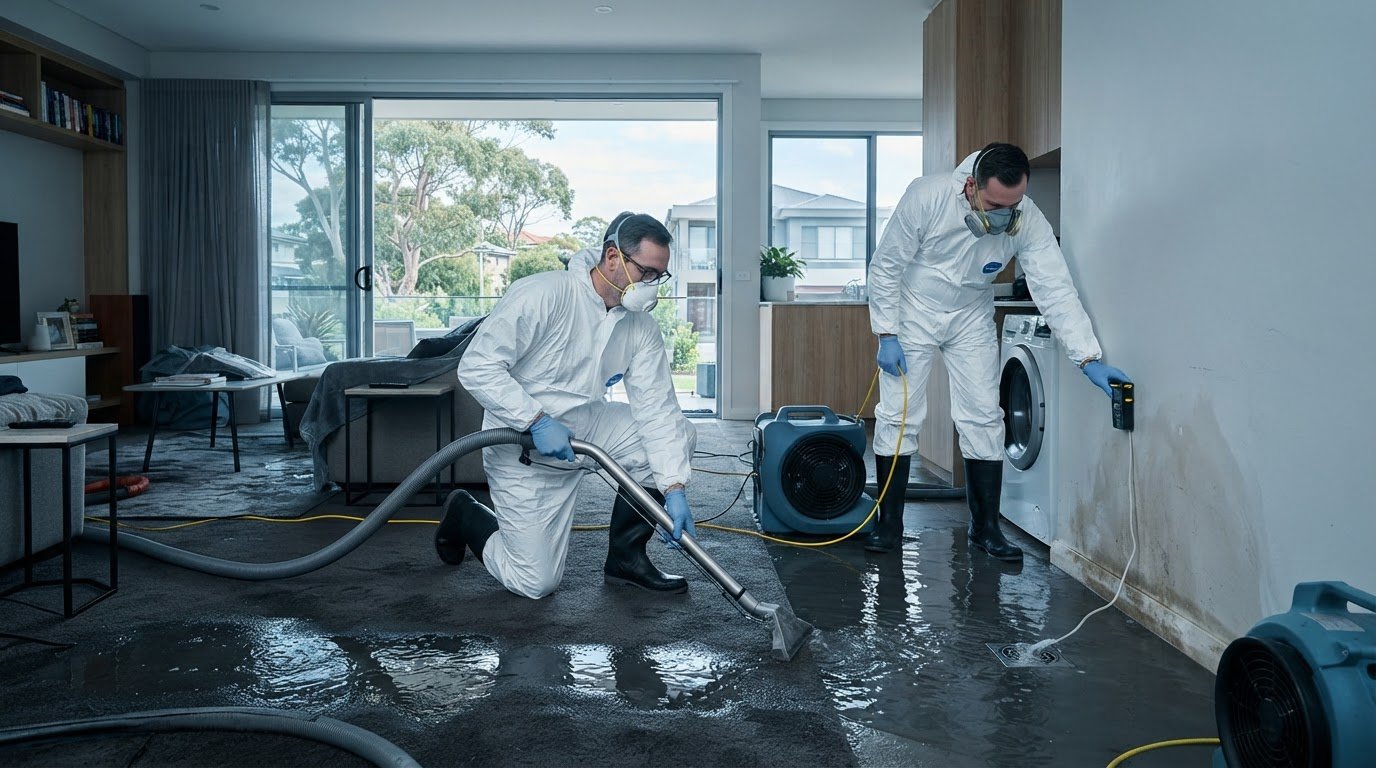
- Step 4: Execute remediation. Implement a plan that addresses both surface growth and airborne spores through air purification and scrubbing.
- Step 5: Obtain a clearance certificate. Ensure a post-remediation verification test confirms the environment is safe for habitation.
Determining Responsibility
The biggest friction point in strata management is the financial divide between the building and the individual owner. A professional report clarifies whether the issue stems from common property defects like rising damp, roof leaks, or failed subfloor ventilation. Conversely, it might identify lot owner issues like poor internal ventilation or internal plumbing leaks. A technical assessment removes the emotion from these disputes by providing undeniable proof of origin. This data-driven approach allows you to allocate costs accurately and fairly, preventing budget blowouts from “grey area” repairs.
Navigating NCAT and Insurance
If a dispute reaches the NSW Civil and Administrative Tribunal (NCAT), you must demonstrate that the Owners Corporation took “reasonable steps” to mitigate damage. Your strata mould assessment report NSW is your primary piece of evidence. It proves that you didn’t ignore the problem and followed a professional path to resolution. This document also provides the technical justification insurance adjusters need to approve claims for water damage repair.
Closing a file requires more than just a clean surface. You must obtain a Clearance Certificate to prove the air quality has returned to safe, habitable levels. This document is your ultimate shield against future litigation from tenants or owners. Don’t leave your building’s health to chance. Contact us today for professional mould inspection services to secure your compliance roadmap and protect your property assets.
From Assessment to Action: The Goldmorr Remediation Advantage
A strata mould assessment report NSW is a vital diagnostic tool, but it doesn’t physically remove a single spore. It’s merely a roadmap. If you don’t follow that map with a rigorous, evidence-based remediation plan, the building remains at risk. We’ve seen many Owners Corporations waste money on assessments only to hire amateur cleaners who use ineffective retail products. This often feeds the problem by adding unnecessary moisture. You need a solution that matches the technical depth of your report. Action must be swift to prevent the spread of contamination to adjacent lots and common property areas.
The Goldmorr System Explained
We utilize the Goldmorr System because it’s specifically designed for the complexities of high-occupancy strata buildings. This proprietary methodology uses a biodegradable fogging process that eliminates surface black mould and neutralizes airborne spores simultaneously. Unlike traditional hand-scrubbing, fogging reaches deep into HVAC systems and structural voids that are otherwise inaccessible. It’s a non-invasive approach that minimizes resident disruption. Occupants don’t have to vacate for extended periods. It’s fast, effective, and safe for everyone in the building. We combine this with high-efficiency air scrubbing to filter out microscopic particles, ensuring the air quality meets strict standards immediately after treatment.
Ensuring Permanent Results
Remediation is only permanent if you address the moisture source identified in your initial assessment. This often involves structural drying or the installation of a subfloor ventilation system to stop rising damp at its source. We don’t just clean; we restore the building’s environmental balance. Strata committees should implement ongoing monitoring strategies, such as periodic moisture checks in high-risk areas like basement carparks or ground-floor units. This proactive stance prevents small leaks from turning into building-wide crises.
If you’re ready to move beyond “band-aid” fixes and secure a healthy environment for your residents, it’s time to act. Contact ABC Mould Cleaning Solutions for an expert assessment and get a compliant strata mould assessment report NSW that leads directly to a permanent resolution. We provide the technical expertise and the physical solutions required to protect your property assets for the long term. Don’t wait for the problem to escalate further when a professional solution is just one step away.
Secure Your Building’s Health and Compliance Today
A strata mould assessment report NSW is the foundation of a safe, compliant building. It transforms vague resident complaints into a technical roadmap for permanent remediation. By utilizing the Goldmorr System’s biodegradable fogging, you ensure that even hidden spores are eliminated without disrupting the daily lives of your residents. This systematic approach protects the building’s long term structural integrity and your professional reputation as a manager. You’ve learned how to identify responsibility and navigate the complexities of NSW strata regulations with clarity.
Stop the cycle of recurring mould and escalating tenant disputes. Our expert Sydney-based specialists provide the evidence-based reports you need to move forward with absolute confidence. We offer affordable, comprehensive solutions that satisfy legal duty of care and insurance requirements. Take the first step toward a permanent fix and a healthier community by engaging a specialist who understands the unique demands of strata environments.
Get Your Professional Strata Mould Assessment Report Today
We’re ready to help you restore safety and lasting peace of mind to your strata scheme.
Frequently Asked Questions
Is a mould assessment report mandatory for strata properties in NSW?
A mould assessment report is practically mandatory for strata properties to meet the statutory duty of care under the Strata Schemes Management Act 2015. Owners Corporations must ensure that common property is maintained in a state of good and serviceable repair. If a dispute reaches NCAT, a professional report is the only way to prove that you’ve taken reasonable steps to identify and mitigate environmental health risks for residents.
Who pays for the mould assessment report in a strata building?
Responsibility for payment depends on the origin of the moisture source. The Owners Corporation typically pays if the mould appears to originate from common property like a roof leak or failed external membrane. If the source is clearly a lot owner’s private issue, they may be held liable for the cost. Often, the Owners Corporation funds the initial strata mould assessment report NSW to objectively identify the source and determine financial responsibility.
How long does it take to get a strata mould assessment report?
You can typically expect a completed report within two to five business days following the physical inspection. This timeframe allows our specialists to conduct thorough moisture mapping and receive certified laboratory analysis for any air or surface samples taken. We prioritize a fast turnaround because mould can spread quickly, potentially doubling in size every 48 hours. Quick reporting allows you to move from assessment to remediation without unnecessary delays.
What is the difference between a mould inspection and a mould assessment report?
A mould inspection is the physical investigative process of visiting the site to find visible growth and moisture. A strata mould assessment report NSW is the detailed technical document that follows, providing the moisture mapping data, thermal imaging, and lab analysis needed for remediation. The report serves as a legally defensible roadmap that identifies the root cause and provides a clear scope of work for the Owners Corporation.
Can a tenant request a mould assessment report from the strata manager?
Tenants have the right to request a mould assessment if the property’s condition affects their health or safety. Under NSW tenancy laws and strata regulations, the building must be kept in a reasonable state of repair. Providing a professional report demonstrates transparency and mitigates the risk of legal action against the landlord or the Owners Corporation. It shows that the manager is taking health complaints seriously and following a professional resolution path.
Does insurance cover the cost of a strata mould assessment in NSW?
Insurance coverage for strata mould assessments is usually tied to the underlying cause of the dampness. If the mould is a direct result of a sudden, covered event like a burst pipe or storm damage, insurance often covers the assessment and remediation. However, they rarely cover mould caused by long-term neglect, poor ventilation, or gradual wear and tear. You should always review your specific policy with the Owners Corporation’s broker.
What happens if the Owners Corporation ignores a mould report?
Failing to act on a professional mould report exposes the Owners Corporation to severe legal and financial risks. If a resident suffers health issues or property damage, the building can be found negligent in its duty to maintain common property. NCAT has the authority to issue legally binding orders that force remediation and mandate compensation payments. Proactive action is the only way to protect the building’s assets and the manager’s reputation.
How often should a strata building be assessed for mould?
Strata buildings should undergo a formal assessment immediately following any water damage event or if musty odours persist in common areas. We also recommend annual inspections for high-risk zones like basement carparks and subfloors where moisture often accumulates unnoticed. Regular monitoring allows you to catch minor leaks before they escalate into a building-wide health crisis. This proactive approach saves thousands in remediation costs and prevents long-term structural damage to the property.