That persistent damp or musty smell isn’t always just a cleaning problem. It can be a sign that moisture is continuing to affect part of the property.
Rising damp and mould can appear together, but they’re not the same thing. Rising damp is a moisture problem associated with houses and ground-connected building materials, while mould is biological growth that can develop in houses, apartments, strata properties, and commercial buildings wherever the right moisture conditions exist.
Understanding which problem you’re dealing with matters because treating visible mould without addressing an active moisture source can allow it to return.
Key Takeaways
- Rising damp and mould are different problems. Rising damp involves moisture moving upward through susceptible building materials, while mould grows where sufficient moisture is present.
- ABC Mould Cleaning Solutions deals with rising damp in houses. Apartments can still experience mould and other moisture problems, but these should not automatically be described as rising damp.
- Subfloor moisture and poor ventilation can contribute to recurring mould in both houses and apartments where a subfloor cavity is present.
- Surface cleaning alone may not address mould in difficult-to-reach areas or the moisture conditions contributing to recurrence.
- ABC Mould Cleaning Solutions uses the Goldmorr System as part of its non-mechanical mould treatment approach.
- Same-day service is available across Sydney Metro, the Blue Mountains, and Wollongong.
- Photos can be emailed to abcmouldcleaningsolutions@gmail.com for an initial quote.
What’s the Real Difference Between Rising Damp and Mould?
Rising damp is a building moisture problem that ABC Mould Cleaning Solutions addresses in houses.
It occurs when moisture from the ground travels upward through porous building materials such as masonry. Where a damp-proof barrier has failed, deteriorated, or is no longer performing properly, that moisture may continue moving through the lower sections of the structure.
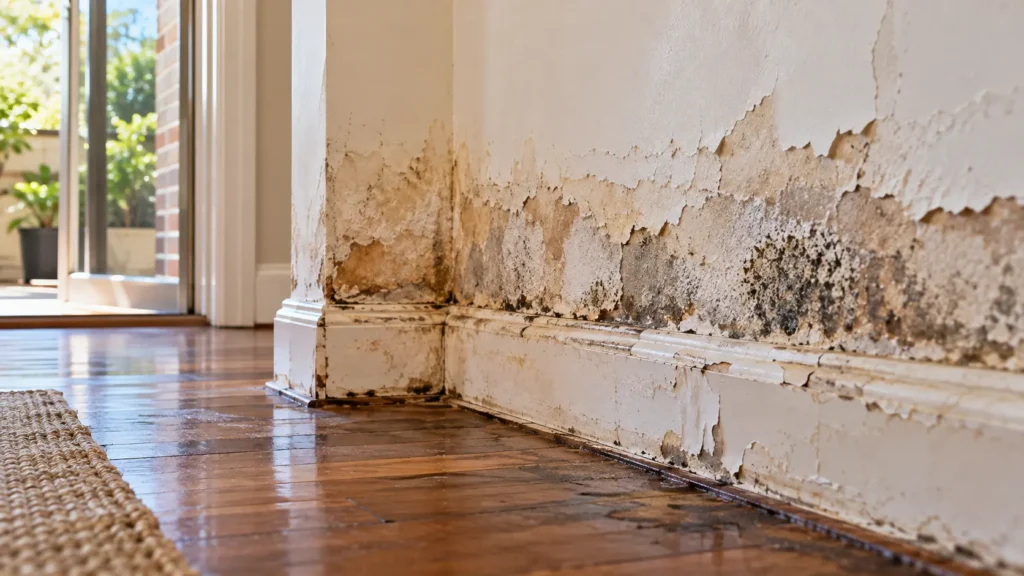
Depending on the property, signs can include:
- Dampness around the lower sections of walls
- Paint or finishes deteriorating near floor level
- Salt deposits or efflorescence
- Damage to lower wall materials or skirting
- A persistent damp smell
Mould is different.
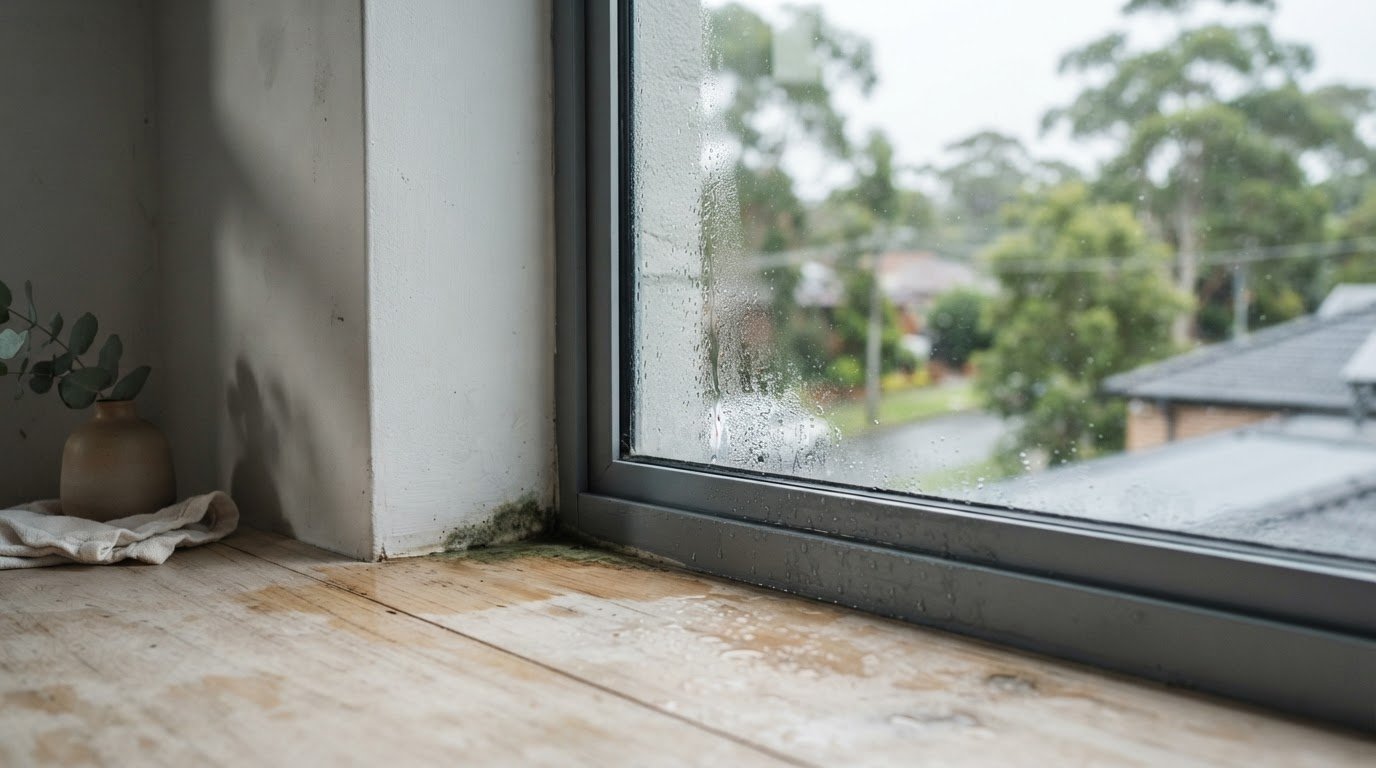
Mould can develop anywhere suitable moisture conditions exist. That includes houses, apartments, strata properties, and commercial buildings.
Possible contributing factors include:
- Condensation
- Bathroom humidity
- Plumbing leaks
- Roof leaks
- Water ingress
- Subfloor moisture
- Inadequate ventilation
- Moisture remaining after previous water damage
- Rising damp in houses
The two problems can occur together in a house. Rising damp can keep parts of a wall moist, and those conditions may then support mould growth.
In that situation, removing visible mould without addressing the underlying damp problem may only deal with part of the issue.
Why Does Mould Keep Coming Back After Cleaning?
Recurring mould usually means it’s worth looking beyond the visible surface.
Cleaning removes what you can see, but it doesn’t necessarily explain why the area became damp enough for mould to grow in the first place.
If moisture conditions remain unchanged, mould can develop again.
This is why mould recurrence after professional cleaning needs to be considered in the context of the entire property rather than simply the visible patch.
The cause might be relatively straightforward, such as poor bathroom ventilation or condensation.
In other properties, further investigation may reveal:
- A hidden leak
- Water entering through another part of the building
- Subfloor moisture
- Inadequate airflow
- Moisture trapped within building materials
- Rising damp in a house
The correct treatment depends on identifying which of these conditions is actually present.
How Do You Recognise Possible Rising Damp in a House?
Rising damp should be assessed based on the condition of the house rather than diagnosed from a single visual sign.
Some indications that may justify further investigation include dampness concentrated around the bottom of walls, deterioration of lower wall finishes, white mineral deposits, or persistent moisture close to floor level.
However, these symptoms can sometimes resemble other moisture problems.
A plumbing leak, external water ingress, condensation, or another building defect may produce similar damage.
That’s why a professional assessment is useful before deciding that rising damp is definitely the cause.
For example, in a house, lower-wall moisture appearing together with salt deposits and deterioration near floor level may indicate that rising damp needs to be investigated.
The mould growing on that damp area is then a separate biological issue that also needs to be addressed appropriately.
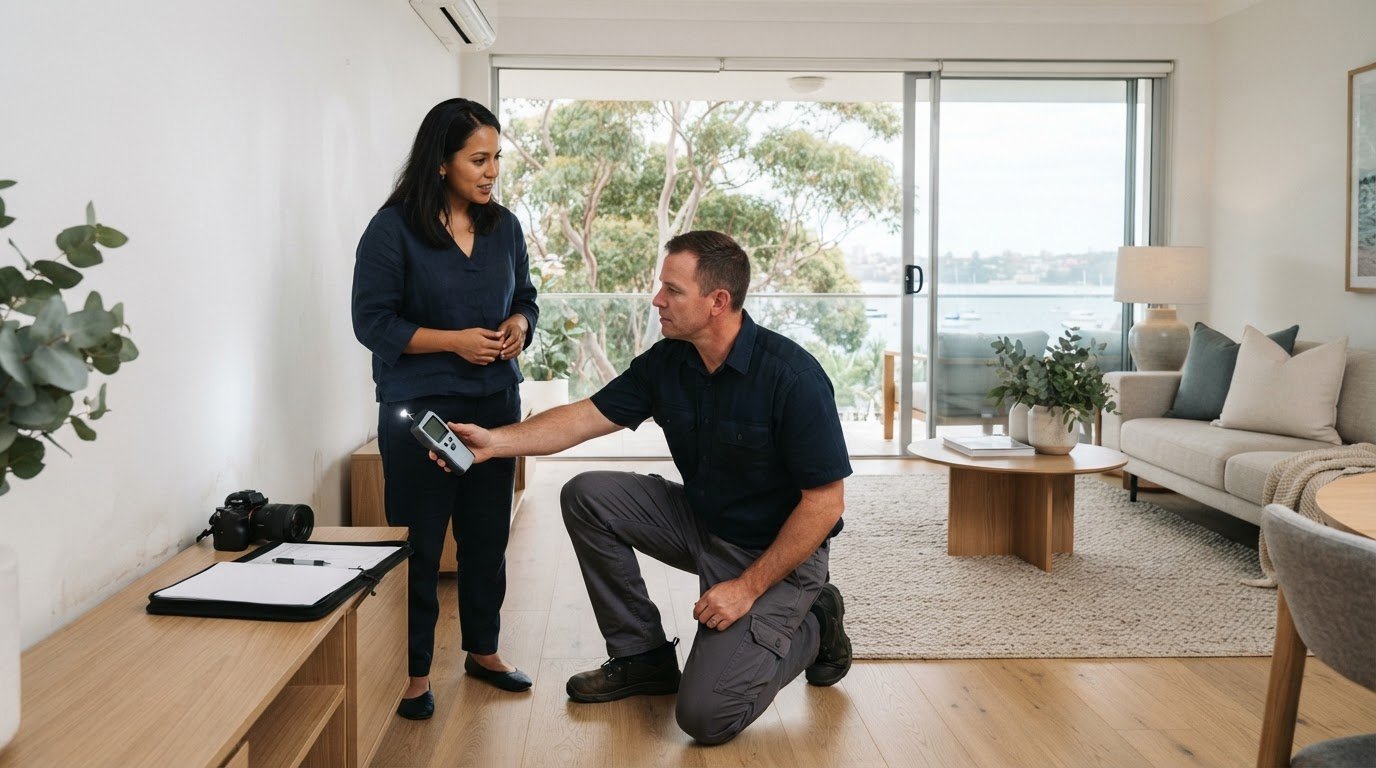
If you’re unsure what’s causing the problem, a professional mould inspection can help establish what is happening before treatment begins.
Which Problem Should Be Addressed First?
The starting point should be the source of the moisture.
If an active building moisture problem remains unresolved, treating mould alone may not provide a lasting result.
| Situation | What May Be Happening | Appropriate Starting Point |
|---|---|---|
| Lower-wall dampness in a house with salt deposits | Possible rising damp or another ground-level moisture problem | Assess the moisture source before mould treatment |
| Mould in corners or on cold surfaces | Condensation or ventilation issue | Investigate humidity and airflow, then treat affected mould |
| Bathroom mould on ceiling or walls | Condensation, humidity, inadequate ventilation, or leak | Identify moisture cause and treat affected ceiling/wall areas |
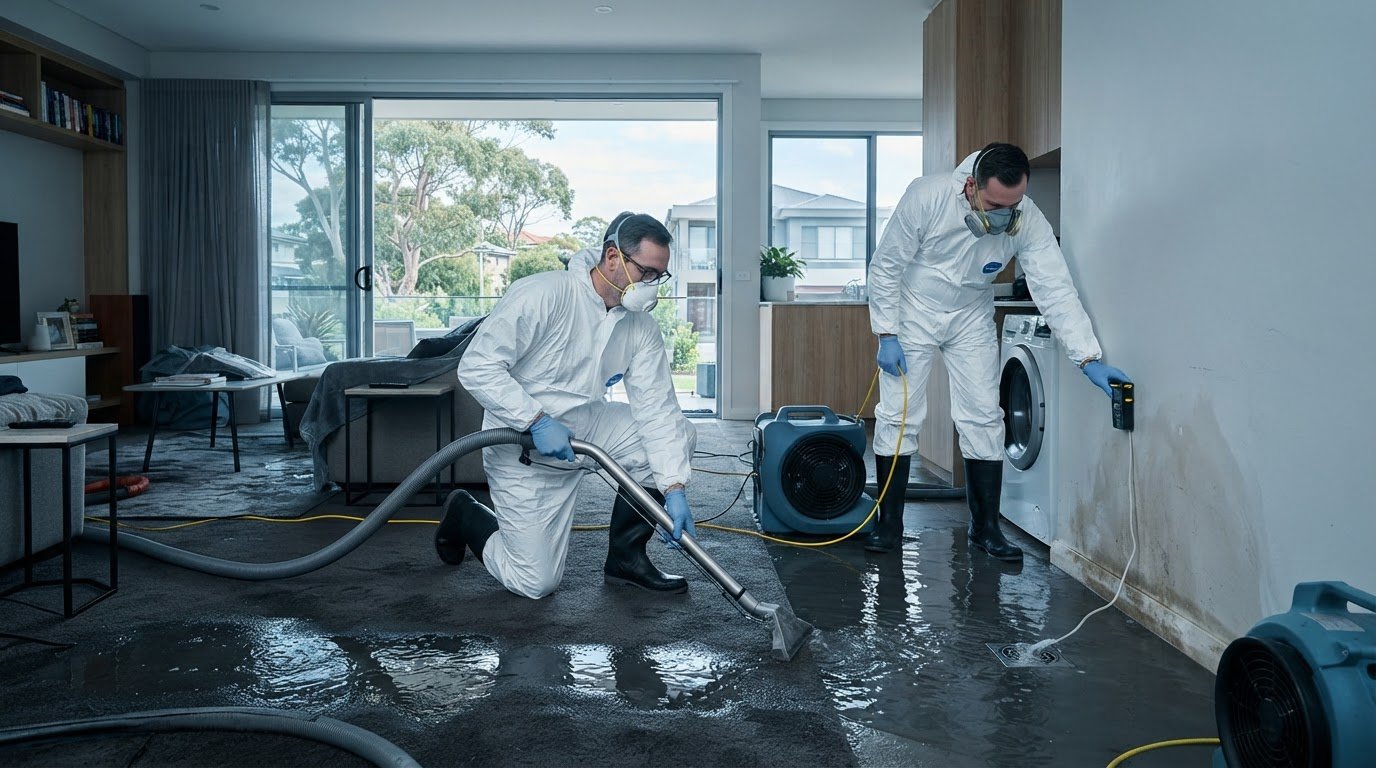
| Mould after flooding or a major leak | Previous or ongoing water intrusion | Stop the source, assess drying, then treat mould |
| Musty smell and mould associated with a subfloor | Subfloor moisture or inadequate ventilation | Assess subfloor conditions and treat contamination |
| Mould repeatedly returning | Ongoing or unidentified moisture problem | Identify the source before repeating surface treatment |
This table isn’t intended to diagnose a property from symptoms alone.
Its purpose is to help determine what needs to be investigated first.
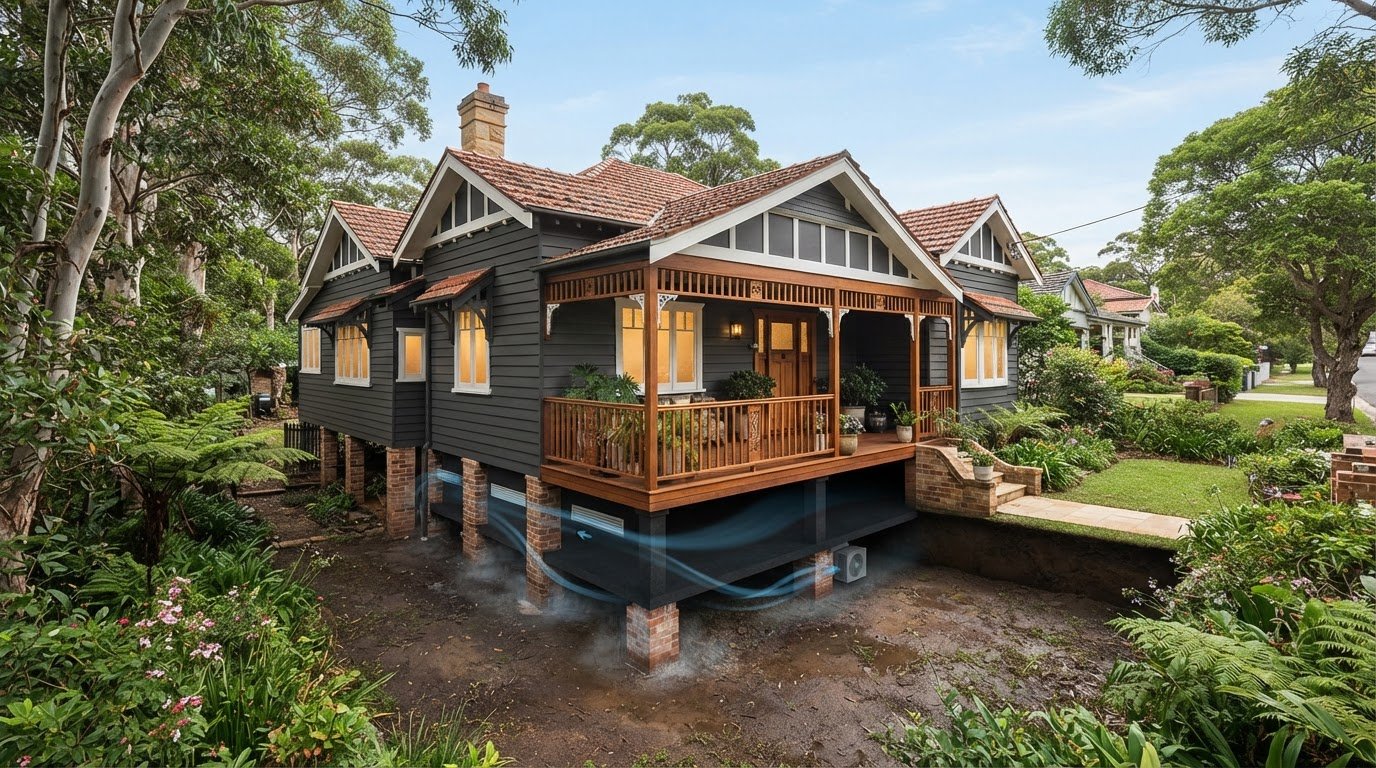
Subfloor Moisture Can Affect Both Houses and Apartments
Subfloor problems aren’t limited to apartments, and they aren’t limited to houses.
Both property types can have enclosed or difficult-to-access areas beneath the floor where moisture and inadequate ventilation contribute to mould.
The exact construction differs from property to property.
A house may have a timber subfloor or enclosed area beneath the building.
A ground-floor apartment or strata building may also have subfloor spaces or shared cavities that require investigation.
When ventilation is poor and excess moisture accumulates, the subfloor environment can remain damp enough to support mould.
Signs worth investigating can include:
- A persistent musty or damp smell
- Visible mould returning in rooms above the affected area
- Signs of excessive moisture beneath the property
- Poor or restricted subfloor airflow
- Damp or deteriorating building materials
These symptoms don’t automatically prove the subfloor is responsible, but they can indicate that the area should be checked.
For more detail, this guide to subfloor ventilation and mould explains how ventilation and moisture conditions beneath a property can contribute to recurring problems.
What About Bathroom Mould?
Bathroom mould is another situation where the moisture source matters.
ABC Mould Cleaning Solutions concentrates its bathroom mould treatment on ceilings and walls rather than bathroom tiles.
Bathrooms naturally create high humidity, and mould on ceilings and walls can be associated with:
- Condensation
- Inadequate ventilation
- Persistent humidity
- Plumbing or water leaks
- Moisture remaining on surfaces for extended periods
If the mould keeps returning, repeatedly wiping the ceiling or wall doesn’t explain why that surface continues to become damp.
The underlying moisture or ventilation conditions also need to be considered.
What Does Non-Mechanical Mould Treatment Do?
ABC Mould Cleaning Solutions uses the Goldmorr System as part of its professional mould treatment process.
The treatment uses a fogging-based approach that allows product to disperse through the treatment area rather than relying exclusively on wiping visible surfaces.
This can help treat areas that aren’t easily addressed through conventional spray-and-wipe cleaning alone.
ABC Mould Cleaning Solutions are approved master technicians for the Goldmorr product range.
The treatment required will depend on:
- The extent of mould contamination
- The areas affected
- Property construction
- Access
- The underlying moisture source
- Whether additional building or moisture repairs are required
Fogging doesn’t replace the need to repair an active water or structural moisture problem.
If moisture is continuing to enter the area, the source still needs to be corrected.
You can read more about the process in this guide to professional mould removal from walls.
How Is Rising Damp Treated?
For houses where rising damp has been properly identified, treatment depends on why ground moisture is moving into the structure.
One option that may be appropriate in certain masonry construction is a chemical damp-proof course.
This involves introducing a moisture-resistant barrier into the affected wall to help limit upward moisture movement.
It isn’t automatically suitable for every house or every damp problem.
Other causes may need to be investigated first, including drainage, external ground levels, plumbing issues, or other sources of water.
The important distinction is that damp treatment addresses the moisture problem, while mould treatment addresses the biological contamination that may have developed because of it.
Where both are present, both need appropriate attention.
The chemical injection damp-proof course cost guide for Sydney provides more information about how this treatment may be used.
What Professional Mould Treatment Won’t Do
Professional mould treatment doesn’t replace necessary building repairs.
If a roof is leaking, plumbing is damaged, a house has unresolved rising damp, or a subfloor continues to accumulate excessive moisture, those conditions need to be dealt with appropriately.
The mould treatment and the moisture correction perform different jobs.
ABC Mould Cleaning Solutions can assess the mould situation and determine what treatment is appropriate.
If Warren needs to inspect the property in person, an on-site assessment is available for $275.
For many jobs, however, the process can start with photos.
Send clear images of the affected areas to abcmouldcleaningsolutions@gmail.com. ABC Mould Cleaning Solutions can review the information and advise on the next step.
For larger or more complicated black mould situations, an on-site assessment may be appropriate before treatment begins.
ABC Mould Cleaning Solutions will also beat any written quote by 10%.
Frequently Asked Questions
How do I tell rising damp apart from ordinary mould?
Rising damp is a moisture problem associated with houses and moisture moving upward through ground-connected building materials. Mould is biological growth that can occur in houses, apartments, and other properties wherever sufficient moisture is present.
Lower-wall dampness and salt deposits in a house may indicate rising damp, but these symptoms should be assessed because other moisture problems can look similar.
Can apartments have rising damp?
ABC Mould Cleaning Solutions’ rising damp work relates to houses. Apartments can certainly experience mould, leaks, condensation, subfloor moisture, and other damp problems, but those conditions shouldn’t automatically be labelled rising damp.
Can apartments have subfloor mould?
Yes. Subfloor moisture and mould can affect both apartments and houses where the building has a relevant subfloor or enclosed area beneath the living space.
The actual cause depends on the property’s construction, moisture conditions, drainage, and ventilation.
Does ABC Mould Cleaning Solutions treat bathroom tiles?
For bathroom mould, ABC Mould Cleaning Solutions concentrates on ceilings and walls rather than tiles.
What happens if I remove mould but don’t fix rising damp in a house?
If rising damp is actively keeping building materials wet, the conditions that contributed to the mould may remain.
The moisture issue and mould contamination therefore need to be considered separately and treated appropriately.
How do I know if my subfloor is contributing to my mould problem?
Persistent musty smells, recurring mould, visible dampness beneath the building, and poor subfloor airflow are all reasons to investigate further.
These signs can occur in both houses and apartments with affected subfloor spaces.
What does the Goldmorr treatment do?
ABC Mould Cleaning Solutions uses the Goldmorr System as part of its fogging-based mould treatment approach. It allows treatment to disperse through the affected area rather than relying only on direct surface wiping.
The appropriate treatment still depends on the property and the source of moisture.
How much does it cost for Warren to inspect the property?
An on-site inspection with Warren is $275.
Many jobs can first be assessed and quoted using photos, so an on-site visit isn’t always necessary.
How do I send photos for a quote?
Email clear photos of the affected areas to abcmouldcleaningsolutions@gmail.com or call 0488 866 853.
How quickly can ABC Mould Cleaning Solutions respond?
Same-day service is available across Sydney Metro, the Blue Mountains, and Wollongong, subject to availability.
For urgent enquiries, call 0488 866 853.
Get the Source Checked Before Treating the Symptom
Recurring mould can have several possible causes.
In a house, rising damp may be one of them. In either a house or apartment, the problem could instead involve condensation, leaks, subfloor moisture, inadequate ventilation, or another source of excess moisture.
That’s why identifying the cause comes before deciding on the treatment.
ABC Mould Cleaning Solutions provides mould treatment for houses, apartments, strata properties, and commercial buildings across Sydney Metro, the Blue Mountains, and Wollongong.
For rising damp, the service applies to houses.
For bathroom mould, treatment concentrates on ceilings and walls, not tiles.
Send photos to abcmouldcleaningsolutions@gmail.com for a quote or call 0488 866 853.
About the Author
Warren Bailey is the principal technician at ABC Mould Cleaning Solutions and an approved master technician for the Goldmorr System.
He works across professional mould treatment, rising damp in houses, subfloor moisture and ventilation issues, and related mould services throughout Sydney Metro, the Blue Mountains, and Wollongong.
ABC Mould Cleaning Solutions services houses, apartments, strata properties, and commercial properties, with treatment based on the actual mould and moisture conditions present at each property.